×

The Standard e-Paper
Informed Minds Prefer The Standard





Audio By Vocalize
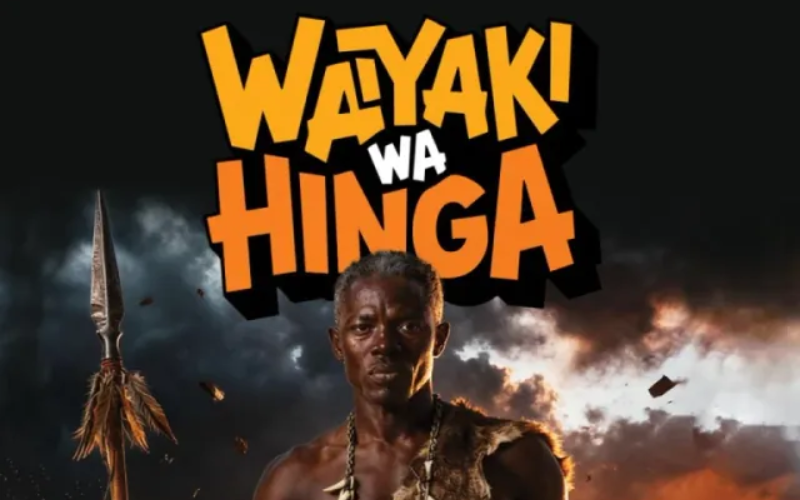
The Gĩkũyũ historical biographical musical Waiyaki wa Hinga returns to the Kenya National Theatre (KNT) from October 16 to 18, revisiting the story of Gĩkũyũ Mũthamaki and early resistance leader Waiyaki wa Hinga.
Presented by Ndúnyú Njerú Creatives, the musical explores Waiyaki’s encounters with British colonial forces in the 1890s. He initially sought to engage with the newcomers through diplomacy, but as demands for cooperation grew into demands for submission, he resisted.
The musical examines the breakdown of their agreements and the events that ultimately led to Waiyaki’s capture and death. It also explores his leadership and the choices he faced as colonial forces expanded their presence.
Performed in Gĩkũyũ, with narration in English and Swahili, the musical is part of Ndúnyú Njerú’s effort to bring indigenous stories to the stage and connect historical narratives with contemporary audiences.
Ken Wakúraya, who plays Waiyaki, says preparing for the role required him to develop a deeper understanding of the historical figure.
He researched Waiyaki’s life, read historical accounts and visited his family to gain further insight into his legacy.
“Understanding him not only as a leader but as a person required digging into history to get the facts about him and rule out the many imaginations about him,” he says.
Wakúraya says that Waiyaki initially saw the possibility of a better future for his people through engagement with the British, but his approach changed when diplomacy failed.
Waiyaki expected the British to honour their agreements, but when they were not respected, he turned to resistance. The pain of betrayal raised the warrior in him.
Performing in Gĩkũyũ, he adds, helped him connect more deeply with the character and the community Waiyaki represented.
“It was everything because you cannot separate a prophet from his language. Speaking his native tongue allowed me to capture the heavy weight of his original words, his deep proverbs, and the true spirit of the community he died defending without losing anything in translation,” he says.
The first run also influenced Wakúraya’s approach to the new production, showing him how strongly audiences connect with stories rooted in history and identity. He says he is bringing greater emotional depth and energy to the performance.
“Staging stories about figures such as Waiyaki is important to understand where we are as a country. We need to go back to where we came from. Our history, especially of the leaders, is so rich,” he says.
Director, playwright and producer Lawrence Murage says his interest in Waiyaki began about four years ago while researching original Kenyan stories, heroes and heroines.
“When I came across Waiyaki wa Hinga, I was struck by how little I knew about him despite the richness of his story. On my vision board, he was ‘an Unknown Story’ and I love challenges,” Murage says.
He says that the discovery convinced him that such histories need to be staged for younger generations.
Murage says that his research also revealed details about Waiyaki’s identity and family history that he believes are not always captured in historical accounts. According to him, Waiyaki was born a Maasai but later became a Gĩkũyũ Mũthamaki, while his father, Kumale, was assimilated into Gĩkũyũland and later given the name Hinga.
The musical also explores debates around Waiyaki’s legacy, including theories that he collaborated with colonial forces after allowing them to establish a camp in southern Gĩkũyũ, as well as accounts linking him to Gĩkũyũ seer Mugo wa Kibiro.
Murage says that adapting more than 40 years of Waiyaki’s life into a two-hour production was one of the biggest challenges. Music, movement, costumes and production design establish the historical setting, with costumes evoking the 1800s and cultural music and choreography adding to the production.
He says that using Gĩkũyũ helps preserve the authenticity of the story, while English and Swahili make it accessible to audiences who do not fully understand the language.
He also sees theatre as a way of preserving indigenous languages and encouraging young people to learn their history and use art to keep it alive.
He hopes younger audiences will see Waiyaki as an example of resistance and leadership.
“Waiyaki was one of the first voices of resistance. He taught us to fight for what is right, stand up for what we believe and not be quiet in the face of oppression. Sisi ndio Waiyaki!” he says.
Subscribe to our newsletter and stay updated on the latest developments and special offers!