×

The Standard e-Paper
Join Thousands of Readers





Audio By Vocalize
"I have a husband, but I have to do this to fend for my children. He works as a stonemason, and what he earns barely gets us through," says Grace*, not her real name, a married woman living in the slums of Mathare and engaged in sex work
She adds, "From Monday to Friday, I prepare my two children for school, drop them off, and then head to downtown Nairobi. I don't consider myself a sex worker as such-just someone trying to earn a living."
"I'm not the only one. There are quite a number of us," adds Grace, who operates only during the day at a popular joint along River Road, in the heart of Nairobi.
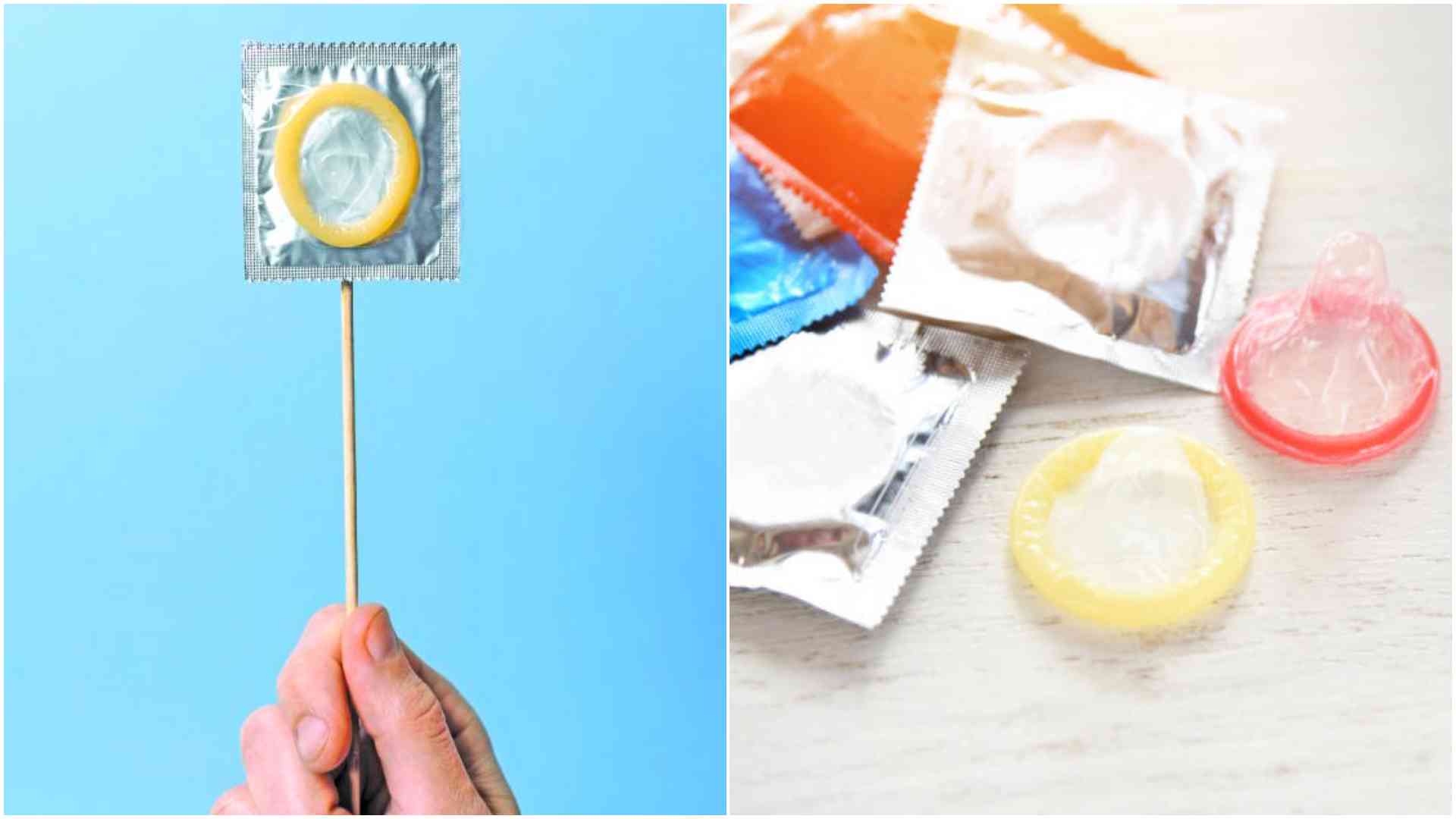
The National Syndemic Disease Control Council (NSDCC) has raised alarm over married women increasingly competing with female sex workers for free condoms at distribution points, amid dwindling supplies.
Dr Douglas Bosire, the council's acting Chief Executive Officer (CEO) says the challenge stems from many women like Grace who engage in transactional sex without registering formally as sex workers, making it hard to estimate demand.
"Our projections rely on data from registered sex workers. But when women in transactional sex don't identify as such, it skews planning and disrupts supply chains, leaving the public vulnerable to HIV and other infections," Dr. Bosire warned.
Kenya has 285,505 female sex workers, according to a population size estimate by the Ministry of Health conducted last year.
"Buying condoms is a bit expensive, and therefore, I largely rely on the free condoms. We simply find them in the toilets at the club where I operate from, but these days they are rare," says Grace.
"Most clients know that we always have free condoms with us. Because of the shortage, sometimes I have to buy, but the client will have to pay an extra amount," she adds.
"I have to insist on using a condom because I have a husband. I need to protect him, as he doesn't know that I engage in this business," says Grace. It is emerging that inaccurate data is disrupting Kenya's ability to plan for HIV prevention commodities like condoms and Pre-Exposure Prophylaxis (PrEP).
"In Nairobi, for instance, we are seeing a growing trend of married women leaving home in the morning to engage in commercial sex work, just like you and I go to work. But do they identify as sex workers? No. And there are many of them."
Adding to the strain is the issue of condom hoarding. "We're also seeing people hoarding condoms," said Bosire. "Whenever there's a rumour of a shortage, some people collect far more than they need."
Kenya requires at least 450 million condoms annually, but currently the country depends on the Global Fund, well-wishers and non-governmental organisations. Every man requires about 40 condoms annually, but current supply levels fall short.
Due to the limited stock, free condom distribution is now targeted primarily at key populations such as sex workers, people living with HIV and discordant couples.
The commodities are available at designated drop-in centres and moonlight outreach points.
Bosire says female sex workers are among the key populations at highest risk of contracting HIV, alongside men who have sex with men, people who inject drugs, and transgender individuals.
The high prevalence of HIV in these groups is a growing concern as Kenya works toward its goal of ending new infections.
According to the latest data from NSDCC, HIV prevalence among female sex workers stands at 29.3 per cent, nearly ten times higher than the national average of 3.3 per cent.
"This is a serious public health concern," warns Bosire "The high prevalence in key populations can spill over to the general population, especially since many of these individuals have families and spouses."
New cases of HIV infections are already being reported among sex workers.
Elizabeth Siama, an official of the Coast Sex Workers Alliance (COSWA), has raised alarm over a growing HIV risk in Mombasa due to a shortage of condoms, lubricants, and PrEP.
"For six months now, condoms have been completely out of stock. We have also not seen lubricants for over a year now," Siama tells The Standard in an interview. "This is a disaster in the making."
With no free supplies, sex workers are forced to buy condoms at high prices ranging from Sh50 to Sh1,000, depending on the brand. This, Siama says, is driving many into risky, unprotected sex.
COSWA, supported by the Stawisha Pwani programme, has been at the frontline of HIV prevention through testing, distributing HIV prevention commodities, and encouraging the use of PrEP.
But for the past two months, even PrEP has been inaccessible. "Health workers tell us it's reserved for pregnant and breastfeeding women. But we need it too because condoms can burst," says a sex worker.
The erratic supply has sparked fear and frustration. "Some clinics offer nothing; others give just a week's supply. We are not sure if or when we will get more. The inconsistency is causing more anxiety and fears," she observes.
COSWA has been working with government facilities to ensure sex workers in hotspots get condoms, HIV testing, and treatment and are encouraged to take PrEP. But the outreach has stalled.
"Only a few outreach programmes have been done recently, and already, we've seen five new HIV infections. I'm sure it's because we didn't have PrEP," said Siama.
The current shortage is threatening the health and livelihoods of over 3,290 registered sex workers in Mombasa, where nearly 20 per cent are already living with HIV.
"When clients bring their condoms, they often deduct the cost from our payment. That eats into our income. But what's worse is when there's no condom at all-we're left exposed," she said.
Siama pleads with the government, "We chose this work to survive. We are doing our part. The government must do its part, too. Give us condoms. Give us PrEP. Test us. Protect us."
Subscribe to our newsletter and stay updated on the latest developments and special offers!