×

The Standard e-Paper
Join Thousands of Readers





Audio By Vocalize
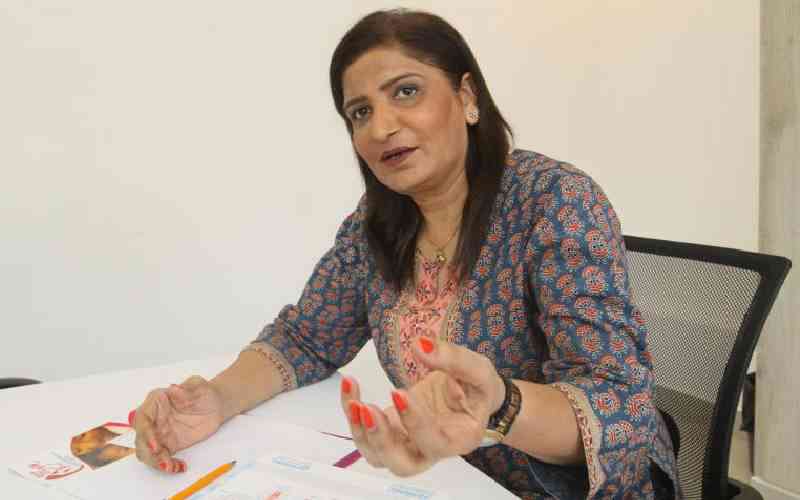
Sometime in March 2024, a couple visited Myra In Vitro Fertilisation (IVF) Clinic in Westlands in a desperate attempt to have a child.
The two, who are now at the centre of a court battle involving the clinic’s owner, Dr Sukhija Sarita, the Office of the Director of Public Prosecutions (ODPP), the Inspector-General of Police and the Directorate of Criminal Investigations (DCI), hoped to become parents through a surrogate mother.
That dream never came to pass. Instead, the couple, feeling short-changed, has become embroiled in a bitter legal battle over the complexion of the resultant child.
The Court of Appeal has rejected the couple’s plea to suspend a High Court judgment barring the DCI from investigating an alleged child trafficking claim against the fertility specialist arising from the dispute over the minor’s complexion.
Appellate judges Luka Kimaru, Sila Munyao and Johnson Okello unanimously held that suspending the High Court judgment would effectively revive the investigations before the appeal had been heard.
They observed that declining to grant the orders sought would neither alter nor prejudice the dispute.
In his judgment, High Court Judge Bahati Mwamuye ruled that the issues raised ought to be investigated by the Kenya Medical Practitioners and Dentists Council (KMPDC).
However, the couple challenged the decision, arguing that Justice Mwamuye had failed to appreciate that the investigations extended beyond the doctor to other individuals and the hospital. They contended that the judge had not identified any wrongdoing or abuse of power by the DCI in investigating their complaint but had instead redirected the matter to the KMPDC.
The protracted dispute began two years ago when Dr Sarita and her clients agreed that she would source a suitable surrogate mother from among women who had expressed interest.
Although surrogacy remains unregulated in Kenya, the doctor conducted the necessary screening and selected a candidate, who subsequently signed an agreement with the couple on November 4, 2024.
The agreement, executed before a lawyer, provided that the surrogate would carry the pregnancy to term and, after giving birth, relinquish all parental rights to the couple, whose identities have been withheld for ethical reasons.
The process initially progressed smoothly. The man visited the clinic to provide a sperm sample collection, while eggs from an Indian donor were selected. The clinic retained the sperm sample. The next step involved creating an embryo by fertilising the donor egg before transferring it to the surrogate mother. According to court documents, the embryo transfer was carried out on November 4, 2024. Everything proceeded as planned until the surrogate mother developed complications at 33 weeks of pregnancy.
“The pregnancy with the surrogate developed complications known as circumvallate placenta, which were detected during a routine antenatal check-up at Myra Clinic and closely monitored,” Dr Sarita said in court documents filed through her lawyer, Kevin Mogeni.
She told the court that on June 3, 2025, the surrogate mother reported to the clinic with bleeding.
“She was rushed to Nairobi South Hospital,” Dr Sarita said, adding that she underwent an emergency caesarean section.
A baby boy was delivered on June 4, 2025. According to the doctor, he was born prematurely.
The surrogate fulfilled her part of the agreement by giving the newborn the name chosen by the couple and listing them as the father and mother before leaving.
According to Dr Sarita, the baby remained at Nairobi South Hospital for four days before developing complications. He was subsequently transferred by the couple to Gertrude’s Children’s Hospital for neonatal intensive care before eventually being discharged into their care. The child’s complexion later became the source of the dispute, beginning with a demand letter from the couple, followed by a police complaint that eventually escalated into a court case.
From letters issued by the DCI summoning Dr Sarita for questioning, it appeared investigators were themselves uncertain about the offence under investigation.
Initially, the investigator informed her that she was required to record a statement regarding an alleged offence of obtaining by false pretences. However, in a subsequent letter directing her and members of the clinic’s staff to produce records relating to the surrogacy arrangement, the DCI indicated that it was investigating allegations of human trafficking.
Dr Sarita argued that she had informed the mother it was too early to determine the child’s race because he had been born prematurely.
She further stated that she had explained the child’s complexion could also be influenced by his prolonged hospitalisation.
“I further advised her to concentrate on the baby’s health, and that the rest could be addressed after his discharge,” she said.
Dr Sarita said her clients remained silent until July 29, 2025, when her clinic received a demand letter from Gikoi Maina and Company Advocates.
DNA test
She stated that the advocates informed her that the couple had commissioned an independent DNA test, the results of which allegedly showed that the child was not genetically related to either of them.
In the letter, the couple demanded compensation for what they described as gross professional medical negligence.
They further alleged that while the child was receiving intensive care, they noticed that his complexion appeared significantly darker than expected. They argued that both the father and the egg donor were of light complexion.
According to the couple’s lawyer, her clients began to fear that the baby may have been swapped at birth.
“Our clients again raised this concern with Dr Sarita. Given the stark differences in the baby’s complexion and the lack of resemblance to either genetic parent, our clients began to fear that the baby may have been mistakenly swapped at birth or that the wrong embryo had been transferred.”
However, they claimed their concerns were dismissed by Dr Sarita and members of her staff. Unsatisfied with the response, the couple commissioned an independent DNA test to settle their doubts.
“The results confirmed their worst fears: the child is not biologically related to either of them,” the letter by advocate Mildred Gikoi stated in part.
According to the lawyer, the clinic had subjected her clients to immense trauma and psychological distress while allegedly violating their trust, dignity and contractual expectations.
She argued that the clinic’s handling of the matter amounted to gross negligence, breach of contract and medical malpractice.
The lawyer therefore demanded that the clinic provide full and fair compensation for the alleged emotional and psychological distress, medical and related expenses, breach of contract, and both special and punitive damages.
She gave the clinic seven days to admit liability in writing and submit a reasonable compensation proposal.
“We have mandatory instructions to initiate civil and criminal legal proceedings against your clinic without further notice at your own risk as to costs and consequences,” the lawyer wrote, adding that the clinic ought to treat the issue with urgency and seriousness.
However, Dr Sarita maintained that the DNA test had been conducted without her knowledge or involvement and that there was therefore no independently verified scientific evidence to confirm whether the child was genetically related to the intended parents.
The dispute then took another turn.
Dr Sarita stated that on August 7, 2025, DCI officers visited Myra Clinic and served her with summons requiring her to record a statement over an alleged offence of cheating and obtaining by false pretences.
She said she honoured the summons and recorded her statement at the Diplomatic Police Unit on August 21, 2025.
According to her, police officers had visited the clinic the previous day and summoned receptionist Nancy Mulwa, Dr Bashir Dekwo, Dr Mohamed Maalim Abdisalan and Doreen Muriungu.
She added that the investigators sought confidential information relating to the clinic’s surrogacy procedures.
Among the documents requested were surrogate recruitment files, screening reports, medical records, consent forms signed by the surrogate mother, surrogacy agreements and documents revealing the surrogate’s identity.
The officers also requested embryo records, administrative documents, financial records relating to the surrogacy arrangement, surrogate allowances and hospital bills.
Dr Sarita argued that the couple could not legitimately claim child trafficking or cheating while they still retained both actual and legal custody of the child. She further noted that they had voluntarily sought the services of a surrogate mother and had obtained a child through that arrangement.
“The first and second respondents are abusing the criminal justice system because there is no independent DNA test that has been conducted with my knowledge or that of the clinic,” argued the IVF and gynaecology specialist.
She insisted that her professional responsibility was to ensure the safe delivery of the child and that her role had nothing to do with child trafficking or cheating.
New area
Surrogacy remains a relatively new area of law in Kenya. In the absence of legislation regulating the practice, couples seeking children through surrogacy enter into private agreements before later pursuing adoption.
These agreements are anchored in the Law of Contract Act, under which surrogacy is treated as a commercial agreement between the parties.
Since Kenyan law recognises parenthood primarily through birth or adoption, intended parents in surrogacy arrangements must ultimately rely on adoption proceedings to obtain legal parental status.
Kenya has grappled with the issue for decades, with two Bills on assisted reproduction still pending in Parliament.
Parliament first attempted to regulate surrogacy in 2014 after former Taita Taveta Woman Representative Joyce Lay seconded the Assisted Reproduction or In Vitro Fertilisation Bill, 2014.
Another proposal, the Assisted Reproductive Technology (ART) Bill, 2022, was sponsored by Suba North MP Millie Odhiambo.
Kenya’s landmark surrogacy case was decided in 2014 when Justice Isaac Lenaola, now a Supreme Court judge, awarded a couple and their twin babies Sh1.5 million in compensation after finding that their constitutional rights had been violated during a dispute over whether the surrogate mother or the intended parents should be listed on the children’s birth certificates.
At the time, MP Shah Hospital had referred the matter to the Director of Children’s Services because it could not determine who should take custody of the newborn twins. The babies were temporarily placed in a children’s home until the dispute was resolved.
“Adopted children are entitled to birth certificates rather than adoption certificates. Likewise, a child is entitled to the identity of his or her genetic parents and, in principle, the registration of the genetic parents, rather than the surrogate mother, as the parents should be permitted,” Justice Lenaola ruled.
Subscribe to our newsletter and stay updated on the latest developments and special offers!