×

The Standard e-Paper
Read Offline Anywhere





Audio By Vocalize
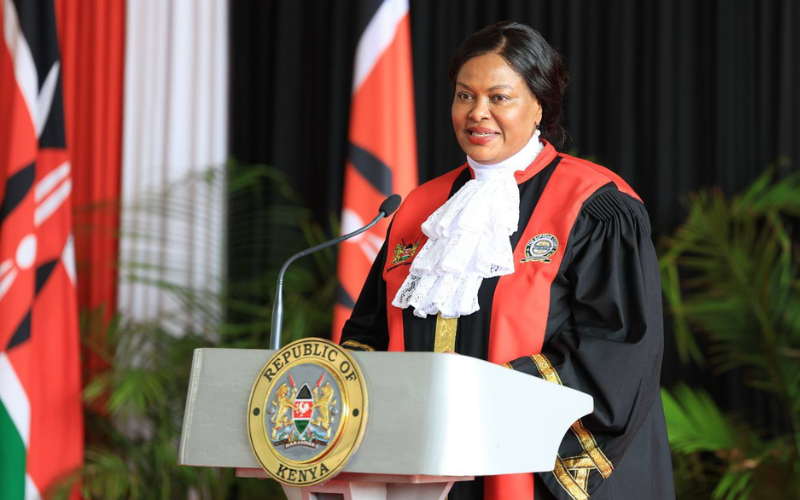
Supreme Court Justice Njoki Ndung’u has elicited debate after a video resurfaced of her admitting she does not speak her indigenous language, Kikuyu.
In the clip, the judge explains that her father forbade the use of vernacular at home to prioritize English for educational and professional advancement.
"A lot of people ask me why I don't speak Kikuyu. I can understand it, I don't speak it," she said, adding, "It's because my dad decided when I was four years old, that in our house we would not speak Kikuyu, because he wanted us to speak the King's English."
According to her, it was her father's measure of how far one would go in life.
"I told him, 'Dad, I can’t be an MP in Kabete if I can’t speak Kikuyu,'" she recalled of a 2007 conversation where she declined a parliamentary run due to the language barrier.
Her father joked that he wished he had known her future would depend on those skills, but the judge noted with a laugh that the Supreme Court does not conduct business in Kikuyu.
The revelation drew mixed reactions online.
While some social media users argued that upbringing shouldn't dictate lifelong proficiency, others defended her, noting that her parents' strict rules clearly did not hinder her career success.
"I hear a Kikuyu accent in her, though faintly," one user commented, while critics pointed out other prominent figures from similar backgrounds who still managed to learn their mother tongue.
The viral moment coincides with President William Ruto officially launching Justice Ndung’u’s candidature for the International Criminal Court during a ceremony at State House.
Seeking election for the 2027–2036 term, she was nominated following a competitive evaluation by the Judicial Service Commission which highlighted her work in constitutional reform and gender justice.
During the launch, Justice Ndung’u emphasized the need for a stronger African voice within the global justice system.
She argued that international jurisprudence often lacks reference to African case law and framed her bid around the necessity of judicial independence.
The election for the ICC bench is scheduled for December 2026, with Kenya now actively lobbying for international support.
Subscribe to our newsletter and stay updated on the latest developments and special offers!