×

The Standard e-Paper
Join Thousands of Readers





Audio By Vocalize
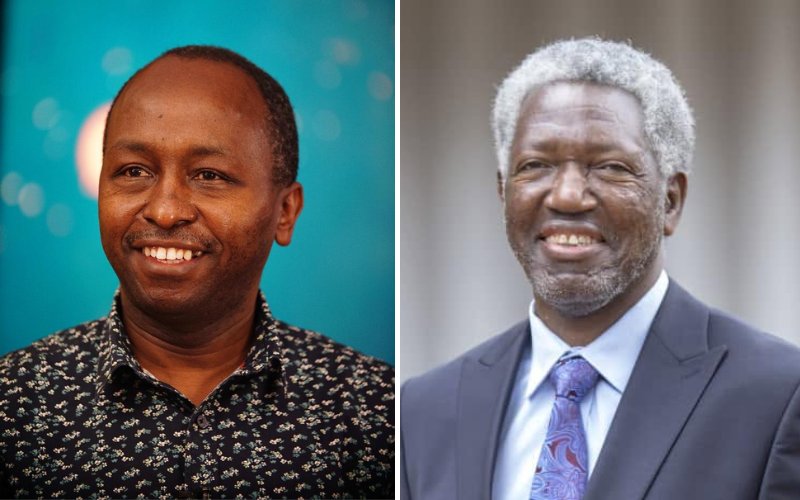
On most days, the parking lot at Parklands Baptist Church holds a quiet story in plain sight.
Two cars, almost always parked side by side, stand out even more when the lot is nearly empty. At first glance, they seem like ordinary vehicles. But their positions reveal something deeper; not just about the church they have helped build, but about the two men who have shaped its journey for decades.
One car faces inward. It belongs to Reverend Ambrose Nyangao, the steady hand who prefers to remain at the centre, nurturing systems, strengthening structures, and ensuring the vision takes root.
The other faces outward. It belongs to Reverend Simon Mwangi, the tireless evangelist who seems perpetually poised for the next assignment, always ready to leave the parking lot and head into the communities beyond the church walls.
It is a simple parking routine, yet one that has quietly mirrored a decades-long partnership. While one anchored the ministry from within, the other carried its message outward—together creating the balance that transformed Parklands Baptist Church into one of Nairobi's most influential congregations.
The two pastors describe their relationship not as the product of meticulously crafted leadership structures, but as what they call a "divine conspiracy"—a partnership free of hierarchy, titles, or seniority, bound instead by a shared sense of calling.
"We are very different in how we interpret what God is saying through us," Rev. Ambrose told Sunday Magazine. "Even the way we park our cars reflects that. I park facing inwards. Simon reverses in, always ready to leave. And he does leave a lot. You cannot keep Simon here for a whole day."
The two men grew up navigating the reality of Nairobi's Eastlands. Rev Ambrose in Ofafa Jericho and went to Dr Livingstone Primary School in Jerusalem, while Rev Simon grew up in government quarters of Mbotela, before their family settled in Korogocho slums.
The difference in their characters played out in different scenarios through the years. In one instance, when Rev Ambrose was invited to China, he declined. Instead, he turned to his colleague and asked, "Simon, do you want to go to China?"
Rev Simon was quick to answer, "I have a passport and I have never been to China".
They have served together as senior and associate pastors for 33 years. Overall, they have served in the church for more than four decades having served as deacons and volunteers during the initial years.
"We do not collide. We complement one another. When you have a lot to do and you are also clear on the objective, you will not spend your time thinking about titles," says Rev Simon.
Their story began in the early 1980s at Parklands Baptist Church, then a young congregation finding its footing under the stewardship of American missionaries.
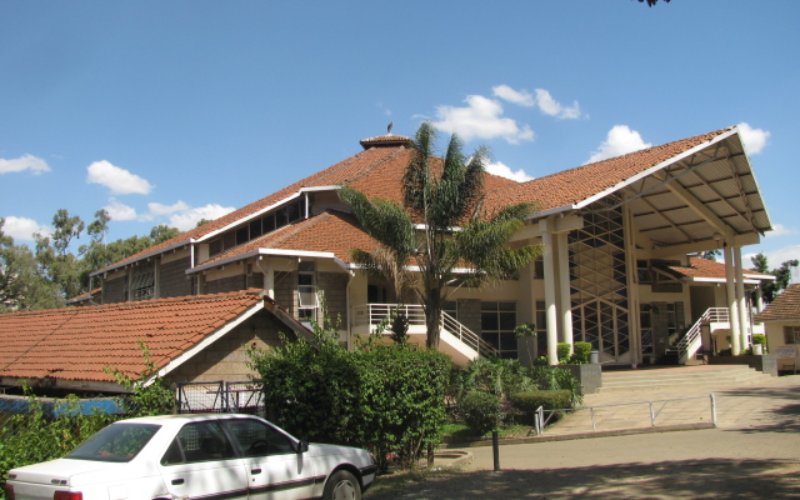
The missionaries had established the ministry in 1969 after acquiring the property on Ojijo Road from the Consolata Sisters. It began life not as a church, but as a community centre; a place where a basketball court, library and social hall became unlikely tools of ministry, drawing Nairobi's young people into a space of belonging.
Founded in 1969 by American missionaries after they acquired the Ojijo Road property from the Consolata Sisters, Parklands Baptist began as a community centre with a basketball court, library and social hall aimed at reaching Nairobi's youth.
In 1976, it became a church with 42 members. Around this time, young teachers Ambrose Nyangao and Simon Mwangi began building their friendship through student Christian fellowships, youth camps and worship sessions. Coming from Nairobi's Eastlands, the church became more than a place of worship—it became a second home, strengthened by missionaries who invested in their lives beyond the sanctuary.
"They didn't just meet us in church," Rev. Simon recalls. "They came to our homes. They knew our families."
Their teaching careers evolved into ministry, with both pursuing theological training. Rev. Simon earned a doctorate in divinity, while Rev. Ambrose studied theology and leadership.
"If you love young people and you are present, they'll respond. Their deepest needs remain similar to those of previous generations"
— Rev Simon.
In the late 1980s, Rev. Ambrose succeeded Rev. Charles Tope as senior pastor and invited Rev. Simon to serve alongside him. Together, they led the church's expansion through the 1990s, including the Westlands project, before building a wider leadership team that later launched initiatives such as Parklands Baptist School in 2010.
Revs Ambrose and Simon say they have been deliberate about training younger leaders and volunteers rather than concentrating responsibility in a few individuals, a departure from what Rev Ambrose notes was "two people doing everything. Today, many people carry the ministry."
From the beginning, Parklands Baptist Church carried a vision that was ahead of its time. Long before youth ministry became a defining feature of modern churches, the congregation was already reaching out to young people through its community centre in the 1970s.
That commitment remains deeply woven into the church's identity today. Youth ministry continues to occupy a central place, with the church's Westlands campus housing a dedicated facility capable of accommodating 5,000 young people.
"We have a massive youth sanctuary tent. It is a highly resourced platform equipped with modern equipment, instruments and its own dedicated leadership team," says Rev. Ambrose.
For him, the church's enduring connection with young people has never been about chasing trends. It has been about presence. He says the guiding principle has always been that to reach young people, "you must become a present reality in their lives, understanding their issues without judgment."
Both pastors acknowledge that the world around young people has changed dramatically—from technology and shifting cultural norms to challenges such as drug abuse and unemployment. But they argue that the core needs of young people have remained remarkably consistent.
"The environment changes. People do not. They are looking for love. If you love young people and you are present, they'll respond. Their deepest needs remain similar to those of previous generations," says Rev. Simon.
Perhaps that explains why the two ageing pastors continue to feel at home among a generation far younger than themselves. They have chosen not to stand at a distance, judging hairstyles, headphones or smartphones, but to engage with young people where they are.
At Parklands, the language itself reflects that closeness. The church is affectionately called "Parkie" by congregants, pastors are casually addressed as "passy", and Rev. Ambrose still refers to his long-time colleague as "Saimo"—small reminders of a relationship that has remained informal, familiar and connected across generations.
Their bond has also been shaped by shared grief beyond the church walls.
In 1997, Rev. Simon stood beside a devastated Rev. Ambrose after the loss of his daughter, Daniella, who died following an accidental paraffin ingestion. Years later, the roles reversed when Rev. Simon lost his wife, Joy, after a five-year battle with cancer. Rev. Ambrose and his wife, Martha, rushed to be with the family and cancelled the Sunday service to offer quiet support.
"We are human. And in those moments, you don't need a sermon. You just need a presence," says Rev. Simon.
Subscribe to our newsletter and stay updated on the latest developments and special offers!