×

The Standard e-Paper
Truth Without Fear





Audio By Vocalize
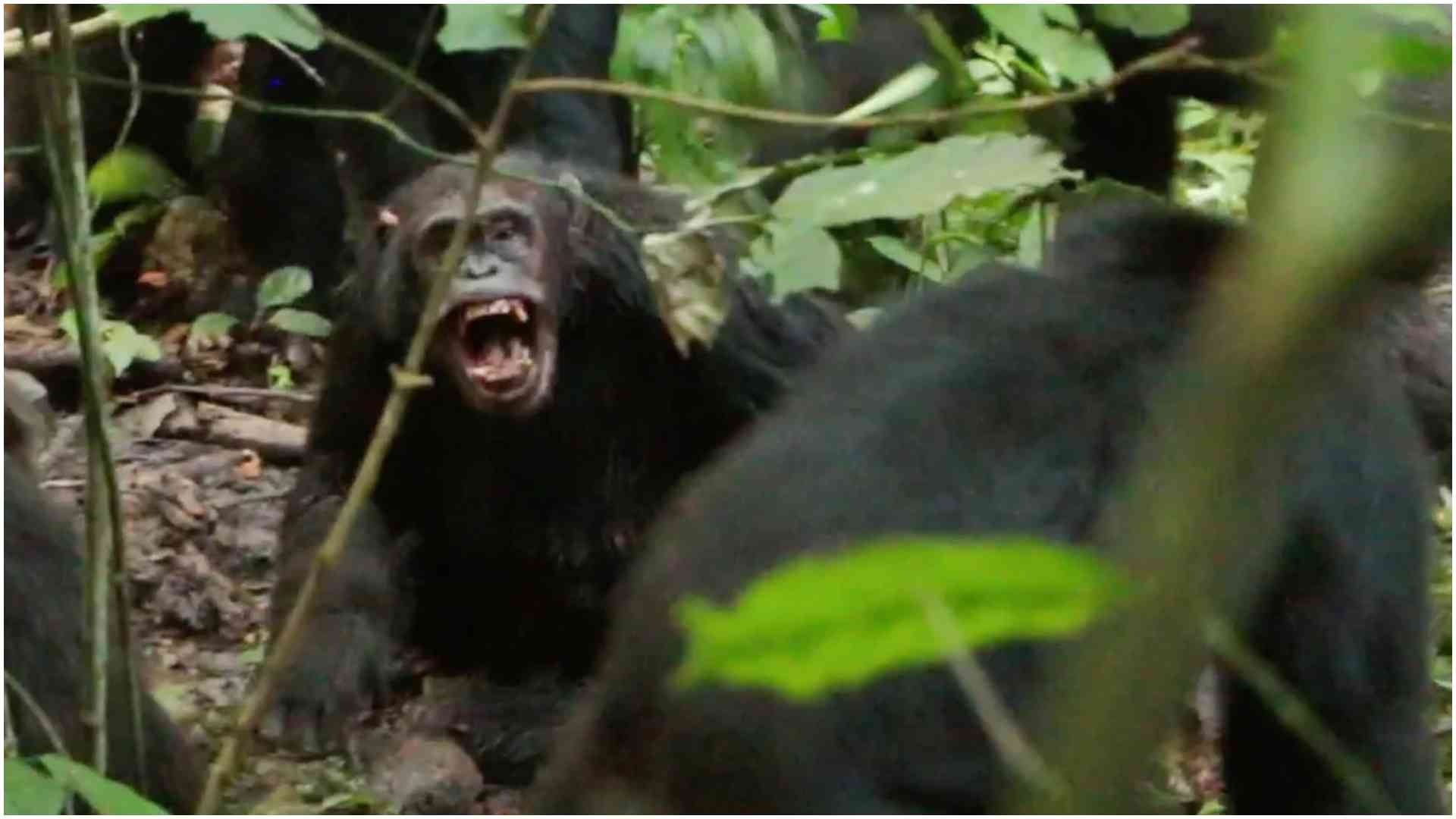
Deep in the lush expanse of Kibale Forest National Park, a chilling drama has been unfolding; one that is forcing scientists to confront uncomfortable truths about one of humanity’s closest relatives.
What was once the largest known community of wild chimpanzees has fractured into two bitterly opposed factions, unleashing years of coordinated violence, territorial warfare, and fatal attacks in what researchers now describe as a rare “civil war.”
The findings, detailed in a recent study published in Science, draw from over 30 years of behavioural observation—offering one of the most comprehensive records ever assembled on chimpanzee social dynamics.
For more than two decades, the Ngogo chimpanzee community lived in relative peace. Social bonds were strong, cooperation was the norm, and individuals moved freely within a shared territory.
Then, in 2015, something shifted.
“It was just chaos,” said John Mitani, who had been studying the group for years told NBC. “They started to scream, shout, chase each other.”
What initially appeared to be sporadic unrest quickly revealed itself as a deeper fracture. Researchers observed a breakdown in social cohesion—alliances weakened, interactions became tense, and individuals began clustering into smaller, more insular groups.
For Aaron Sandel, who was present when tensions first erupted, the experience was surreal.
“In the moment, I felt like a war correspondent,” he recalled. “I wanted to be there, to witness it, to document it, and try to understand what was going on. But once I shared my notes with colleagues, that’s when the emotional weight hit me.”
By 2017, the once-unified chimpanzee society had effectively split into two factions—later identified as the Western and Central groups.
Territorial behaviour became more pronounced. Areas that had once served as communal feeding and socialising zones were gradually transformed into contested boundaries.
“What used to be the centre of a shared territory had become a border,” the researchers noted.
By 2018, the division was complete.
Using social, spatial, and reproductive data, scientists confirmed a permanent “fission”—a rare and significant event in chimpanzee societies. The Western group consisted of 10 adult males and 22 females, while the larger Central group had 30 males and 39 females.
At first, there were still faint traces of the old unity. A few Central females, often accompanied by their young, would occasionally cross into Western territory, especially when food sources like fig trees were abundant.
But even these fragile connections soon disappeared.
After 2018, there were no longer any affiliative relationships between members of the two groups. Grooming stopped. Cooperation ceased. Even reproduction between the factions came to an end—marking a complete social and biological separation.
What followed the split was not merely separation but sustained, organised violence.
Between 2018 and 2024, the Western chimpanzees launched a series of coordinated attacks on the Central group. These were not random encounters, but deliberate incursions often preceded by silent territorial patrols.
Researchers documented at least 24 such attacks.
The toll has been devastating: at least seven adult males and 17 infants from the Central group have been killed.
Six of the attacks on adult males were directly observed, while a seventh was inferred with high confidence based on evidence gathered in the field.
The pattern was consistent. Groups of Western males would enter Central territory, locate isolated individuals, and carry out lethal assaults, behaviour strikingly similar to intergroup warfare observed in other chimpanzee populations.
But what makes this case particularly disturbing is that these attacks are occurring between individuals who once belonged to the same social unit.
“This is a transition from cohesion to sustained lethal conflict,” the researchers concluded.
Among the most poignant moments in the conflict was the death of a chimpanzee known as Basie in 2019, the second confirmed casualty in the ongoing war.
For the scientists who had spent decades observing these animals, such losses were deeply personal.
“There’s a level of attachment that builds over time,” Sandel admitted. “You’re not just watching data points—you’re watching lives unfold.”
Co-author Jacob Negrey emphasised that the situation remains unresolved.
“The war is ongoing—it’s not finished yet,” he said.
This is only the second time such prolonged, lethal conflict has been documented within a single chimpanzee community.
The first occurred in the 1970s at Gombe Stream National Park, where pioneering primatologist Jane Goodall witnessed what became known as the “Four-Year War.”
In her memoir, Goodall described that period as profoundly disturbing, as it revealed a capacity for violence that challenged earlier perceptions of chimpanzees as largely chilled and cooperative.
The Kibale conflict now adds a new and more prolonged chapter to that narrative.
Chimpanzees (Pan troglodytes) share close evolutionary ties with humans, making their behaviour particularly significant for understanding the origins of social cooperation and conflict.
Male chimpanzees remain in their natal groups for life, forming tight-knit alliances that are crucial for defending territory and maintaining dominance hierarchies.
Such cooperation can, however, turn outwardly aggressive—especially when resources such as food, space, or mating opportunities become contested.
In Kibale, scientists believe a combination of these factors may have driven the initial split, though no single trigger has been definitively identified.
What is clear is that once the fracture began, it set off a chain reaction—eroding trust, reshaping alliances, and ultimately leading to violence.
The unfolding events have also drawn comparisons to the film War for the Planet of the Apes, where internal divisions among apes lead to devastating consequences.
In that fictional narrative, the breakdown of unity—symbolised by the collapse of the principle “ape shall not kill ape”—mirrors what scientists are now witnessing in the wild.
While the film dramatizes such conflicts, researchers say it captures a fundamental truth: social animals, including primates, are not immune to internal strife.
Perhaps the most unsettling aspect of the Kibale conflict is how closely it parallels human behaviour.
Territorial disputes, shifting alliances, and cycles of retaliation are hallmarks not only of chimpanzee societies, but of human history as well.
Subscribe to our newsletter and stay updated on the latest developments and special offers!