×

The Standard e-Paper
Truth Without Fear





Audio By Vocalize
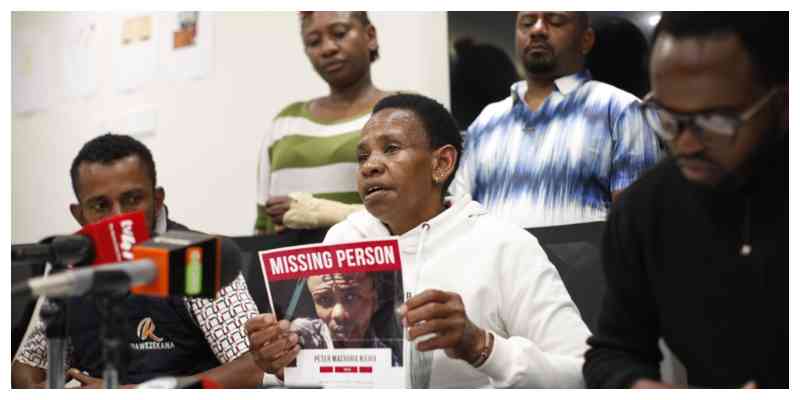
Victims of State abductions during the 2024 Gen Z protests have moved to court, claiming that they are being sidelined in the compensation process announced by President William Ruto.
A lobby group formed by the victims claimed that despite the sweetened reparation process being spearheaded by a panel chaired by Prof Makau Mutua, they have to date not been contacted or have received a penny.
According to the panel, the process that began on June 25 has seen Sh674 million paid to victims who have been verified.
In a Kenya National Commission on Human Rights report released in June, 1,101 victims were verified and cleared for compensation, 35 of which were survivors of enforced disappearances that the group alleged was state-sanctioned.
In their case, the victims stated that the government had allocated Sh 2 billion for compensation. So far, according to them, Sh 1.12 billion has allegedly been disbursed. However, they said that the 35 victims who were listed as abductees have not been kept in the dark to-date.
They claimed that the authentication process is opaque, as no one can put a finger on anyone who has received compensation from the Kenya National Human Rights Commission (KNHRC) and the panel of experts on compensation of victims of human rights violations, including from demonstrations and protests.
“The respondents have unlawfully introduced a superfluous ‘authentication process" as a precondition for compensating victims of torture and enforced disappearances, which process is ultra vires, unconstitutional, and in direct contravention of the Terms of Reference prescribed under Presidential Proclamation No. 1 of 2026,” their lawyer Abner Mango argued.
The victims include Bernard Kavuli, Jamil Longton, his brother Aslam Longton, Bob Njagi, Billy Mwangi, Peter Muteti, Gideon Kibet, Ronny Kiplangat, Maurice Wambua and Rajab Mohamed
They said that Makau and the panel are acting beyond their prescribed scope by collecting, processing, and authenticating compensation claims outside the 1101 victims already verified by the KNHRC.
According to them, the omission of persons who were abducted during Gen-Zs protests is not an administrative oversight but a calculated move to selectively implement the report by the human rights organization.
“The respondents' conduct amounts to a flagrant breach of the doctrine of legitimate expectation, fair administrative action under Article 47 of the Constitution, and the principle of legality, as the Respondents have arrogated to themselves powers expressly withheld by the Terms of Reference,” argued their lawyer.
In his supporting affidavit, Kavuli, who is the co-ordinator of the Coalition of Victims & Survivors against State Violence, told the court that by June this year, at least 1815 claims have been documented, with 1101 victims being verified.
He added that those who were to be compensated included 245 victims of sexual violence, 75 victims of torture, 135 victims of arbitrary arrests, torture and violence, and 138 whose properties had been destroyed.
However, he said, the compensation report was missing the 35 persons who were victims of abduction.
According to him, the High Court in Kerugoya was clear that the Makau team had no powers to control the compensation process.
In the judgment, the court ruled that Dr Ruto was required by the law to ask for a report from the KNHRC on the violation of human rights and proposals on the means of compensating them.
He said that they fear that the compensation process will be concluded without them being considered.
“The continuation of this unlawful exclusion constitutes an ongoing violation of the Petitioners' rights to human dignity, equality, and freedom from discrimination, guaranteed under Articles 10, 27 and 28 of the Constitution of Kenya, 2010.”
“The petitioners' demand for publication of the list of the 35 victims of enforced disappearances and the status of their compensation is imperative to ensure transparency, public scrutiny, and accountability, and to safeguard against abuse of the compensation process,” claimed Kavuli.
He asserted that all the abductees had a legitimate expectation that they would be compensated and allowed to move on with their lives.
However, he said that none of the answers sought from those responsible was forthcoming on how they ended up being removed, who issued such instructions and why the 35.
He cited lack of transparency as the elephant in the room.
“Petitioners submit that the public interest and the integrity of the reparation process demand the immediate intervention of this Honourable Court, as any delay would render the Petitioners' claims nugatory and defeat the very essence of constitutional justice and redress of constitutional violations,” argued Kavuli.
They now want the process halted until their grievances are settled by the court.
They have sued the Attorney General, the Makau panel and listed KNHRC, the Law Society of Kenya and Independent Police Oversight Authority (IPOA) as the interested parties.
Subscribe to our newsletter and stay updated on the latest developments and special offers!