×

The Standard e-Paper
Join Thousands of Readers





Audio By Vocalize
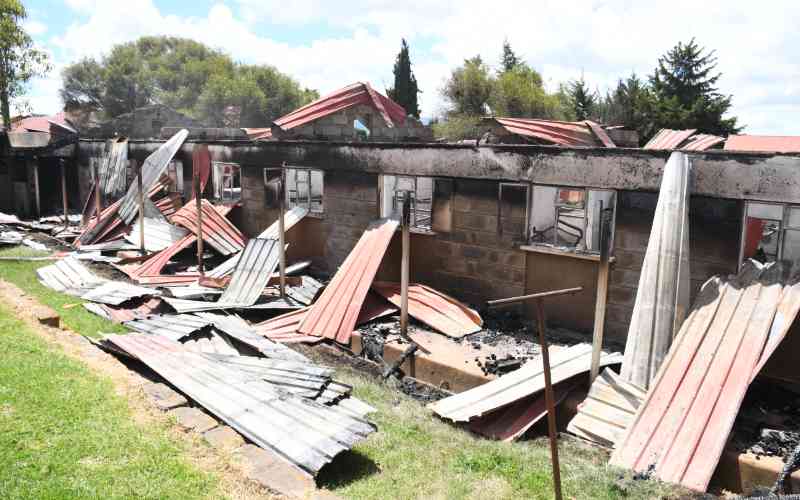
Dormitories destroyed by fire at St Joseph's Seminary School in Molo, Nakuru County, on May 31, 2026. [Kipsang Joseph, Standard]
Panic has hit school administrators across the country, with many opting to send students home in the wake of rising cases of unrest.
The decisions come less than a week after a dormitory fire at Utumishi Girls Senior School claimed the lives of 16 students, deepening anxiety within the education sector.
It has now emerged that fear is creeping among school heads and administrators over possible personal responsibilities if disturbances occur under their watch.
The anxiety follows the government's decision to take action against the principal and two teachers at Utumishi Girls Senior School after investigations established that an intelligence warning of possible unrest had been received, but no intervention was taken before the deadly dormitory fire.
In the last two days alone, more than 10 schools have sent learners home or placed institutions under heightened surveillance after threats of arson, student walkouts and unrest.
Naivasha Girls High School was temporarily closed after reports emerged that students were planning to set part of the school on fire. Parents were instructed to collect their children as authorities moved to contain the situation.
At Saseta Girls High School, Bomet, students were sent home following unrest linked to alleged threats to torch dorms.
Moi Forces Academy, Lanet, has also asked parents of Grade 10 and Form Three students to collect their daughters for a short break amid growing tension.
Stakeholders' voice
Reports of unrest have also emerged from Kiangunyi Girls High (in Murang'a), Loreto Girls (Kiambu), Gitugi Girls (Murang'a) and Njumbi High (Murang'a) schools, all of which have either suspended learning or advised parents to pick up learners.
And now, stakeholders argue that the decision to take action on the school administrators has sent shockwaves through the education sector.
“The action against the Utumishi officials appears to have sent shockwaves through the education sector, with many school heads now finding themselves under pressure to demonstrate that they are acting swiftly on any indication of student unrest,” Elimu Bora Working Group national coordinator Joseph Wasikhongo told The Standard.
But that’s not all, the silence from the top leadership in the country has deepened concern as unrest continues to spread across schools with no clear national direction.
President William Ruto has not issued a detailed response outlining immediate interventions, even as institutions close and learners are sent home.
Similarly, the Cabinet Secretary Julius Ogamba, the Principal Secretary for Basic Education Julius Bitok are yet to issue measures to address cases of unrest.
While addressing the crisis, Bitok directed education officers to intensify monitoring and intervene early when signs of unrest emerge. “Schools must strengthen communication channels between students, teachers, parents and administrators to promote trust, openness and timely resolution of concerns.”
Ogamba also warned that learners found engaging in criminal acts such as arson will face disciplinary and legal consequences.
Intervention measures
National Parents Association chairman Silas Obuhatsa, however, argue that many schools only react after tensions have escalated. “Children complain about food, sanitation and welfare issues for months. By the time a strike happens, the frustrations have been building for a long time.”
Education analyst Emmanuel Manyasa argues that schools are increasingly reflecting broader societal challenges. He also faulted the Ministry of Education for allowing excessive enrollment in some institutions while other schools remain "underutilised".
“The 100 percent transition policy did not require overcrowding national schools. Admission should be based on bed capacity and available facilities,” he said.
Data from emergency responders indicate that more than 36 school fire incidents have been reported since January, with many linked to student unrest.
Government investigations, parliamentary inquiries and education task forces have repeatedly documented second term as the period most vulnerable to disturbances.
The term is typically characterised by heightened academic pressure, exam preparations and prolonged periods of school attendance, factors that have consistently featured in official reports investigating the causes of unrest.
A review of previous government findings shows that many of the issues identified more than a decade ago continue to surface today.
Despite the government's ongoing audits and reports to investigate the causes of unrest, the country has yet to see a proper strategy to address these underlying concerns beyond responses triggered by individual incidents.
The recurrence of unrest has also raised questions about the effectiveness of interventions introduced over the years.’
Kenya Union of Post Primary Education Teachers(KUPPET) Secretary General Akelo Misori on Wednesday attributed the continued unrest in schools to the disconnect between the MoE and the Teachers Service Commission (TSC).
Misori argues that the ministry is blaming unrest on school heads while it has failed in the management of the institutions by providing inadequate funding. He also attributed the unrest crisis to political interference, huge enrollment leading to congestion and the boarding school format in schools.
Subscribe to our newsletter and stay updated on the latest developments and special offers!