×

The Standard e-Paper
Truth Without Fear





Audio By Vocalize
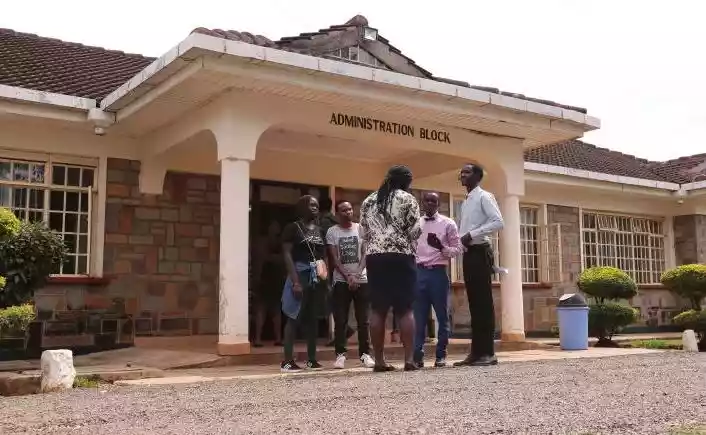
Shocking details have emerged about the state of medical and dental training in the country after a regional audit found that only three of 13 inspected institutions met the standards required to train future doctors and dentists.
The new report by the East African Community (EAC) found the two major institutions offering medicine and dental training Moi and University of Nairobi had not met the required qualifications to host the program recommending a review of the standards.
In some institutions, the report has called for closure.
The findings place the University of Nairobi and Moi University—long regarded as pillars of medical training—under the spotlight after both fell below the compliance threshold, raising serious concerns about the quality of graduates entering the healthcare system.
In the EAC report, the University of Nairobi scored 68 per cent, while Moi University trailed at 61 per cent—both falling below the required compliance levels and prompting recommendations for a review of their programmes.
Overall, only Maseno University, Mount Kenya University and Kisii University were found to be fully compliant, with the rest either partially meeting the standards or failing altogether.
Mount Kenya University School of Medicine scored 82 per cent, Maseno University School of Medicine 81 per cent and Kisii University School of Health Sciences 80 per cent.
The rest were either partially compliant or failed to meet the minimum requirements altogether.
The findings raise fresh questions about the quality of training received by healthcare professionals and the potential implications for patient safety.
This comes at a time when the Kenya Dental Association (KDA) is challenging the accreditation and recognition of the Bachelor of Science in Oral Health programme.
And now, consumer rights lobby group COFEK has seized on the report, calling for an urgent, comprehensive audit of all medical and dental training institutions in the country.
In the letter to the Education CS Julius Ogamba, dated June 10, COFEK called for scrutiny of all dental and medical programmes in the country.
"The programme the KDA seeks to protect may be the one most legally exposed. The programme it seeks to impugn is the one the law most clearly protects," COFEK stated.
The consumer lobby questioned whether the Bachelor of Dental Surgery programmes at the University of Nairobi and Moi University had undergone all accreditation processes required after the institutions received their charters and demanded publication of accreditation records, approvals and programme status reports.
COFEK argues that the integrity of the healthcare system is at stake, urging regulators to prioritise patient safety over institutional reputation.
It has called for immediate enforcement of standards, a review of accreditation processes, and decisive action against institutions that fail to meet required benchmarks.
The lobby group further insists that the government must restore public confidence by ensuring that only properly trained and qualified professionals are allowed into the healthcare system, warning that failure to act risks exposing patients to unsafe care.
The most damning findings were made against Uzima University College Medical School, which scored 49 per cent and was declared non-compliant.
Inspectors found that key departments in basic sciences had not been established, most teaching was being undertaken by part-time lecturers contrary to EAC guidelines, student enrolment exceeded approved limits and lectures were being conducted in an incomplete building considered a safety hazard.
The inspection team recommended closure of the institution and transfer of continuing students to other medical schools.
Several institutions were also directed to suspend admissions until deficiencies were addressed.
Kenya Methodist University School of Medicine, which scored 59 per cent, was ordered to suspend admissions after inspectors flagged over-enrolment, poor staffing ratios, infrastructure gaps, inadequate staff development and lack of accommodation for clinical students.
Kenyatta University School of Medicine, which scored 54 per cent, was directed to suspend admissions to its Bachelor of Medicine and Bachelor of Surgery programme until recommendations arising from the inspection were implemented.
Masinde Muliro University School of Medicine, Moi University School of Medicine and Egerton University Faculty of Health Sciences were also instructed not to admit new students until they addressed shortcomings identified by inspectors and underwent fresh inspections.
The report further found that some of the country's most established institutions were struggling to meet regional standards.
The University of Nairobi School of Medicine scored 58 per cent and was classified as partially compliant, while the University of Nairobi School of Dental Sciences scored 68 per cent and was similarly found to be partially compliant.
Moi University School of Dentistry, one of only two institutions currently training dentists in Kenya, scored 54 per cent and was also classified as partially compliant after failing to implement recommendations from previous inspections.
Jomo Kenyatta University of Agriculture and Technology School of Medicine scored 66 per cent and was found to be partially compliant.
In total, nine institutions were classified as partially compliant, one was found non-compliant and only three met the required standards.
The findings have resurfaced amid a dispute involving the Kenya Dental Association, which has maintained that the Bachelor of Science in Oral Health programme is not equivalent to a Bachelor of Dental Surgery degree and does not qualify graduates to practise dentistry.
In a memorandum to Parliament, KDA warned that the issue raises concerns over public safety, professional standards and regulatory oversight.
Subscribe to our newsletter and stay updated on the latest developments and special offers!