×

The Standard e-Paper
Read Offline Anywhere





Audio By Vocalize
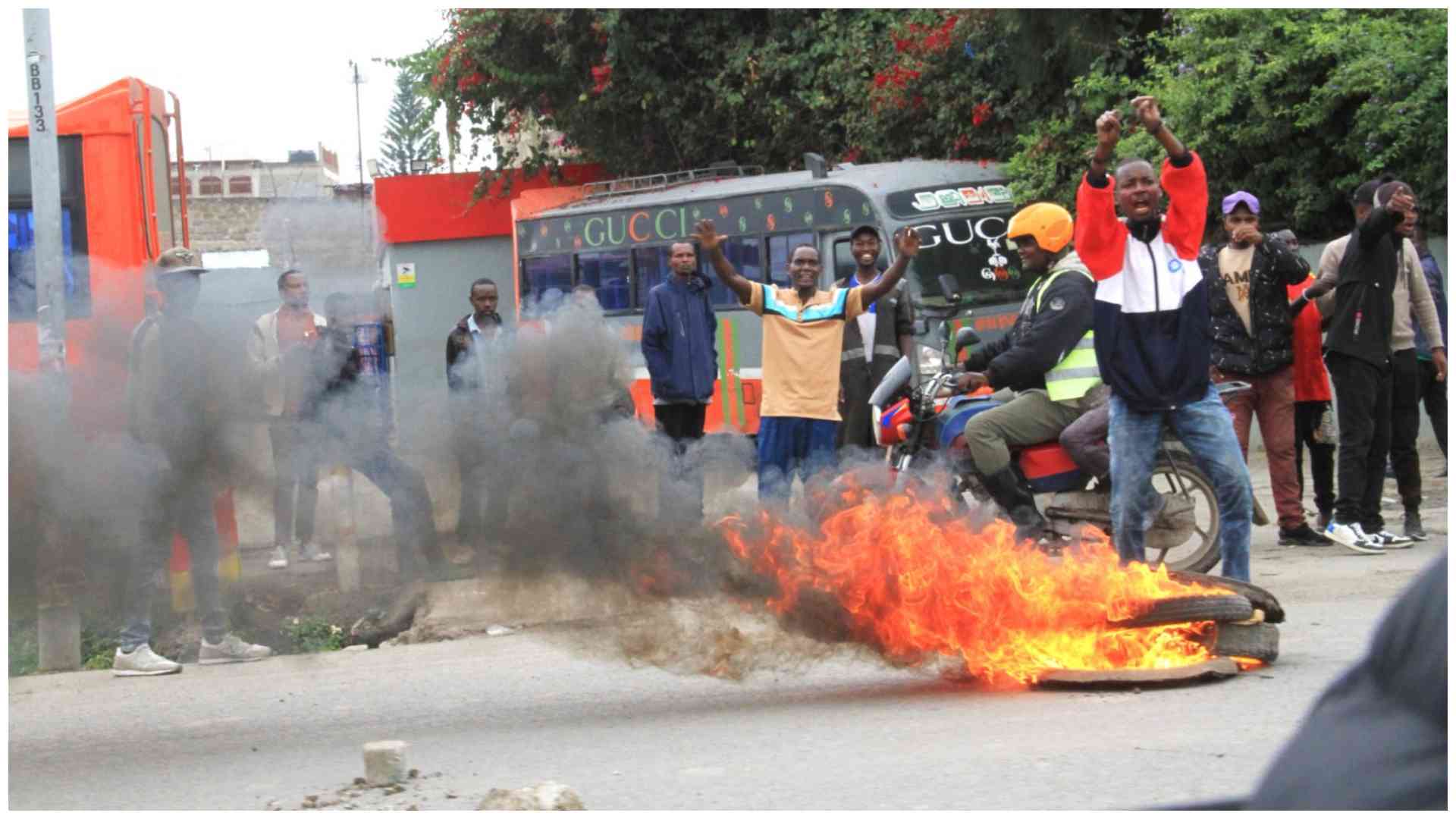
In the wake of the matatu protests against high cost of fuel, a devastated Kitengela businesswoman posed on social media: “Why destroy someone else’s business?”
The proprietor of KikisKitchen, a Swahili and Somali cuisine restaurant near Nairobi Women Hospital becomes one of the latest of the victims of demonstrations that have rocked the once peaceful Kitengela town in the last two years.
Located about 30km from Nairobi city, the fast-growing town in Isinya Sub-county of Kajiado County is now the new protests hotspot, taking over from Kibera, Mathare, Githurai and other areas.
This cosmopolitan neighbourhood is rapidly gaining notoriety for being a flashpoint whenever the country is experiencing upheavals. In the past few years, protests in Kitengela have been the most violent and pronounced in a neighbourhood ironically inhabited by the middle class, a segment in society known for being laidback.
The town has experienced unprecedented levels of violent protests, vandalism of shops and public infrastructure, looting, and destruction of property that have also led to loss of lives and serious injuries.
So intense have been some of these demonstrations that even the security officers have been overwhelmed in some instances.
For the umpteenth time, protesters on May 18, 2026 paralysed transport and business activities in the town and its environs by taking over the major roads and blocking the busy Nairobi-Namanga highway.
The highway and the Kitengela-Isinya road, which connect Nairobi, other parts of Kajiado and even the Tanzanian border are crucial in facilitating movement of people and goods.
Busy town
During the protests, the major roads leading into the town were rendered impassable after protesters lit bonfires and blocked sections of the roads using stones and debris. Some motorists were harassed and robbed of their personal valuables.
According to Eric Oduor, the secretary general of the Kenya Union of Journalists (KUJ) and a resident of Kitengela, some of the youths are usually ferried to the town to cause chaos.
“Kitengela is a busy town with only one entry and one exit. The town’s road infrastructure is anchored by key routes such as the Nairobi-Namanga highway and the Kitengela-Isinya road, which connect the town to Nairobi, other parts of Kajiado County, and even the Tanzania border. These roads play a vital role in facilitating the movement of goods and people. If you close it, there is no entry and exit, hence maximum impact,” Oduor said.
According to police, the rowdy youth, some of them ferried to Kitengela that fateful day at dawn, infiltrated the anti-fuel hike protest and engaged the officers in running battles for the better part of the day.
When calm was finally restored, what was left was a trail of destruction, with a number of business premises broken into and looted.
Small-scale traders and business owners in affected towns also lamented the economic losses caused by the demonstrations and transport disruptions. In Kitengela, several shops remained closed for the better part of the morning as fears of chaos and insecurity grew.
“We decided to close our business but the demonstrators still broke in and vandalized our properties. Every time there is a demonstration, we must suffer losses,” the KikisKitchen manager told The Nairobian.
Kajiado County Police Commander Alex Shikondi said the suspects were ferried to the area in four unmarked vehicles around Prison Road within the town.
Kitengela, one of the satellite towns around the capital city stands above the rest in terms of affordable land, infrastructure growth, rising housing demand and better living spaces.
Though there has been the growth of mixed-use developments that integrate residential, commercial, and recreational spaces that has led to the town’s expanding middle-income population, this growth has also led to higher rates of crime, anti-social behaviour, stress on infrastructure, pollution, demands on local government and even competition for public resources.
“The town faces challenges with traffic congestion especially during peak hours and rainy seasons. Some roads in residential and commercial areas have also not been developed, disrupting mobility and connectivity,” a resident said.
Locals have attributed this disturbing cycle of violent protests to a number of factors, including incitement by political leaders, land grabbing, police excesses including abductions, torture and use of brutal force, and protests against government policies.
Another resident said unemployment had also contributed to the chaos since most young men are idle, adding that massive job losses like at the Export Processing Zone (EPZ).
Like in other protests across the country, the situation has been worsened majorly by police response and also goons who infiltrate the protests, undermining the principles of peaceful assembly and contributing to escalation of violence, injuries, and fatalities.
Since 2021 when the famous ‘Kitengela Four’ were abducted and later brutally murdered, the town has made headlines for demonstrations and violent protests, abductions and torture, demos over land grabbing among other issues.
During one of the demonstrations, on July 7 last year, demonstrators stormed Kitengela Sub-county Hospital where they terrorized the staff and even vandalized the facility. The armed goons stormed the hospital, disrupting a cesarean section procedure in progress and forcing medical staff to abandon their posts.
They not only interrupted the critical surgery but also vandalized the operating theatre before setting the hospital gate ablaze
“In another reprehensible incident, marauding gangs stormed the operating theatre at the Kitengela Sub-county Hospital, interrupting an emergency caesarean section and terrorizing patients and medical staff. Two suspects have been arrested and arraigned,” Interior Cabinet Secretary Kipchumba Murkomen said then.
These demonstrations significantly impact the area’s economy, impose a massive burden on the quality of life and even create uncertainties.
During the 2024 anti-government Finance Bill demonstrations, for example, traders were left counting losses as most premises remained closed.
During the same period, a government administration block which was situated a few metres from Kitengela Police Station housing the Assistant County Commissioner (ACC), Chief’s and Administration Police Service offices were also torched and one person was shot dead.
Some residents told The Nairobian that this situation has also been exacerbated by the reported cases of abduction which the government vehemently denied.
“The government is living a lie, killing young men and denying it. If the abductions are criminal, how come only those who are deemed to be anti-government are being abducted?” a resident asked.
Single gang
Among the first reported cases of abduction was on April 19, 2021 when four friends were abducted as they left Enkare restaurant and their bodies were later found in various locations.
The recovery and identification of the bodies revealed a distinct pattern of killing, a modus operandi indicative of the work of a single gang.
All the bodies were stuffed in gunny bags and tied with ropes before being dumped within a radius of about 30km. None of them was shot, all appeared to have been strangled and were registered at the mortuaries as “unidentified male adults”.
On August 19, 2024, Jamil Longton and his brother Aslam Longton were abducted in Kitengela alongside activist Bob Njagi. They were held incommunicado, while being tortured, for 32 days before they were dumped in Gachie, Kiambu County.
Residents argue that the county government has failed in basic service delivery, no clean water, no sewerage, impassable roads, and poor security.
Equally, land has also been an emotive issue in the area, partly contributing to the protests.
In February last year, Kajiado governor Joseph ole Lenku announced that the county would begin repossessing land from owners who had defaulted on land rate payments.
This sparked fury among residents, especially those with freehold titles and they went to court. According to them, the county government had failed to provide basic services such as proper roads, sewerage systems, and clean drinking water. This forced them to rely on biodigesters, pit latrines, and private or community water sources.
Lady Justice Loice Komingoi ruled that the move by the county government lacked public participation, rendering it unconstitutional.
“There is no reason why such rates should be collected when the county has made life an enduring experience for its residents, who have to install solar panels along dark streets to enhance security and prevent loss of life and property,” she ruled.
Subscribe to our newsletter and stay updated on the latest developments and special offers!