×

The Standard e-Paper
Kenya's Bold Newspaper





Audio By Vocalize
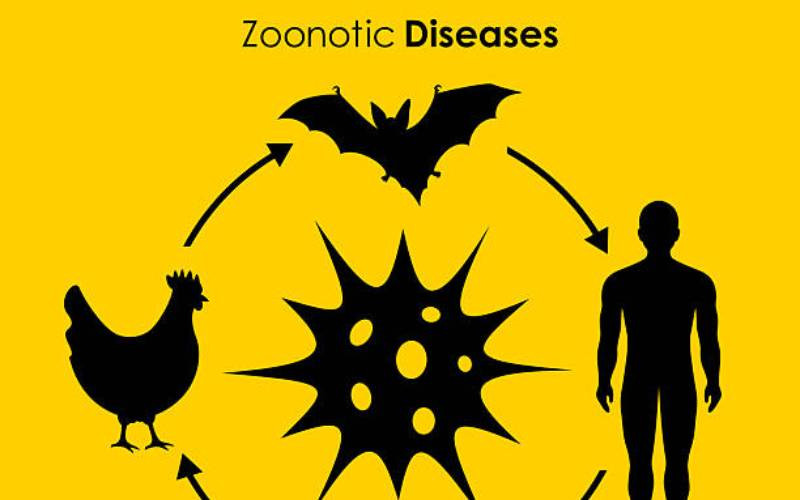
If HIV and Ebola both began as zoonotic diseases, why did one evolve into a global sexually transmitted epidemic while the other remains primarily a disease spread through contact with infected body fluids? According to Dr Moses Masika, Consultant Infectious Disease Physician and Medical Microbiologist, the answer begins long before a virus reaches its first human host. It starts with biology.
There are thousands of viruses circulating in wildlife around the world. Most never infect humans. Even when they do, many fail to survive beyond the first infected person because they cannot effectively enter human cells or reproduce inside them. Only a tiny fraction successfully adapts.
"There are many zoonotic diseases and only a few of them are sexually transmitted," says Dr Masika.
Using HIV as an example, he explains that what infects humans today is different from the virus that originally circulated in non-human primates.
"HIV is a human infection. There is a similar virus in monkeys called SIV, which is simian immunodeficiency virus, compared to human immunodeficiency virus. And it is suspected that before, people who were butchering these monkeys may have been exposed to this virus. And over time, the virus mutated and became able to infect humans." Scientists believe similar spillover events may have occurred many times before one viral lineage eventually acquired the genetic changes needed to establish sustained transmission among humans.
That transformation altered the course of global public health forever. The keys that unlock human cells. To understand why some viruses adapt while others do not, Dr Masika compares viruses to microscopic organisms carrying biological keys. Every virus has a unique structure that determines which cells it can infect. Without the correct "key", infection simply cannot occur.
"Usually, what determines how a virus is transmitted is the virus structure. Each virus has what we would call keys on its surface that it uses to enter specific cells. That's why you find, for example, that HIV enters specific immune cells. Ebola will infect specific cells. And so, viruses with that key can enter these specific cells. And over time, if they can make copies or replicate in those cells, then there is an opportunity for them to transmit to the next person." The more opportunities a virus has to infect people, the greater its chances of evolving. Every infection becomes another opportunity for mutation. Most mutations disappear. Occasionally, one gives the virus an advantage. That is why scientists monitor every major outbreak closely.
Why scientists discovered sexual transmission for decades, Ebola was regarded purely as a disease transmitted through direct contact with infected blood and body fluids. That understanding changed after the devastating West African epidemic. Between 2014 and 2016, more than 28,000 people were infected, creating the largest cohort of Ebola survivors ever studied. Researchers began following survivors long after they had recovered. What they discovered changed international guidelines.
"The change you may have seen or the observation you may have made of several of these diseases being transmitted sexually is because, over time, they were able to infect so many people. And out of these many people, the opportunity arose for us to observe that this virus is also able to be transmitted sexually. But if it was just one or two people, it may have been difficult." Large outbreaks, Dr Masika explains, provide scientists with enough data to identify unusual patterns that smaller outbreaks might never reveal.
The virus that refused to leave. Among the most surprising findings was that the Ebola virus could remain inside the testes long after it had disappeared from the bloodstream. Some survivors still had detectable virus in semen months after recovery. Others remained positive for more than a year.
"Because, for example, Ebola was able to infect close to 30,000 people in the 2014 outbreak, and people were followed up over time, and it was realised that, for example, this virus was, especially in men, getting into the testes and was able to be retained in that area for months, even in some people more than a year, and still retain the ability to infect others sexually, even after they have recovered from the rest of the body." The explanation lies inside some of the body's most protected organs. Where viruses hide.
The testes are among several organs scientists describe as immune-privileged sites. Unlike most parts of the body, immune activity in these organs is deliberately restrained to protect delicate tissues from inflammation. That protection, however, may also benefit invading viruses.
"This is because there are specific areas in the body that we call immune-privileged. The immune system in those places is controlled tightly." He continues: "So if a virus manages to enter, the immune system does not act very vigorously or very quickly and very intensely. It is controlled because if it acts too vigorously, it can cause damage." The same principle applies to other organs.
"And so, in these places, the viruses in these places include the eye, the testes, and the brain." Dr Masika explains that the body's defence system walks a delicate balance. Destroying every virus at all costs could also damage organs essential for vision, reproduction and neurological function. As a result, immune responses are carefully regulated.
"And in these places, viruses may be able to remain for a long time while making copies without being fully cleared by the immune system. Yes, the immune system can access those places, but it is controlled to avoid damage because there are spaces which are very tightly controlled." That biological reality explains why viruses such as Ebola, Zika and Marburg have all demonstrated the ability to persist in semen after recovery.
"So because of that, we've seen several viruses like Ebola and even Zika or Marburg being able to multiply or make copies in the testes, for example." The implication is significant. A man may appear fully recovered, return home and resume normal life while still carrying the infectious virus in semen.
"And when a man is infected and has fully recovered from looking at their body, and they have no more symptoms, they are still secreting the virus. And when they have unprotected sexual contact, they can transmit that virus." However, experts stress that this does not make Ebola, Zika or Marburg sexually transmitted infections in the same sense as HIV.
Sexual transmission remains an uncommon route rather than the primary driver of outbreaks. With forests shrinking, wildlife habitats disappearing and human populations expanding into previously untouched ecosystems, scientists warn that opportunities for zoonotic spillover are increasing. Climate change, urbanisation, international travel and environmental degradation are accelerating contact between people, livestock and wildlife.
According to Dr Kalebi, future spillover events are no longer a question of “if” but “when”. "Yes. Deforestation, urbanisation, climate change, population growth, and increased human-wildlife interaction are creating more opportunities for zoonotic viruses to spill over into humans. Recent examples include COVID-19, Mpox, Ebola virus disease, Marburg virus disease, Nipah virus infection and recurrent outbreaks of Lassa fever. While most do not achieve sustained human-to-human transmission, viruses continually evolve, making future adaptation a real possibility." The continent, he says, has made remarkable progress since the Ebola epidemic and the COVID-19 pandemic. But progress alone is not enough.
"Africa has significantly strengthened its disease surveillance, laboratory diagnostic capacity, and outbreak response in recent years, particularly following the Ebola and COVID-19 pandemics. However, continued investment in public health systems, genomic surveillance, research, workforce training, and cross-border collaboration remains essential to detect and contain future emerging threats before they become widespread." Despite decades of scientific discovery, HIV remains unique.
"HIV is the only major human sexually transmitted infection that is clearly known to have emerged from a zoonotic virus and subsequently evolved into a globally sustained sexually transmitted epidemic." Dr Kalebi notes that Human T-lymphotropic virus (HTLV) has also been suggested to have originated through zoonotic transmission before adapting to human-to-human spread.
By contrast, familiar sexually transmitted infections—including syphilis, gonorrhoea, chlamydia, trichomoniasis and human papillomavirus (HPV)—are well-established human pathogens and are not considered zoonotic diseases. Likewise, Ebola, Zika and Mpox have demonstrated the ability to spread sexually under specific circumstances but have not evolved into classical sexually transmitted infections.
"More recently, viruses such as Ebola virus disease, Zika virus disease and Mpox are capable of sexual transmission. However, sexual transmission is incidental rather than their primary mode of spread and has not driven their evolution into classical sexually transmitted diseases." He adds: "So HIV remains the only sustained sexually transmitted infection with zoonotic origin." For experts, the lesson extends far beyond HIV or Ebola. It is a reminder that outbreak response cannot end when the last patient is discharged.
"Both diseases have shown that outbreak control does not end when patients recover. Strong laboratory capacity, rapid diagnosis, genomic surveillance, contact tracing, and structured long-term follow-up of survivors are essential to detect ongoing transmission early and prevent future outbreaks."Dr Kalebi and Dr Masika concur.
The next spillover may never spread beyond a single village. It may disappear without leaving a trace. Or, like HIV more than a century ago, it could quietly begin rewriting the future of global public health long before the world even knows its name.
Subscribe to our newsletter and stay updated on the latest developments and special offers!