×

The Standard e-Paper
Truth Without Fear





Audio By Vocalize
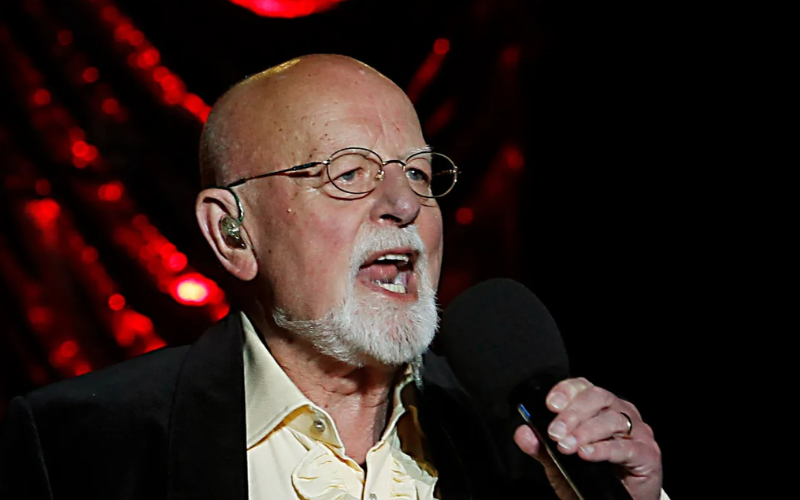
It has been two years since the passing of Roger Whittaker, the Kenyan-born and legendary folk singer.
Although he died aged 87, Whittaker was renowned for his smooth baritone voice, poetic lyrics, gentle stage presence and signature whistling won him an international following as an expert whistler.
Though never a figure of mass hysteria, his heartfelt melodies and ability to connect across cultures made him one of the most enduring entertainers of his generation, a true Kenyan-born voice that touched the world.
David Isindu, director of the Nairobi Girls Chorale, said his signature tunes remain etched in the nation's memory.
"His life, artistry and legacy have meant so much to so many all over the world. We are thankful that the gift of his music remains with us," Isindu said.
For many Kenyans, the song My Land is Kenya is not just a melody but a patriotic ode that continues to inspire pride. Its simple yet evocative lyrics," My land is Kenya, so warm and wild and free, you'll always stay with me here in my heart," have been adopted as a patriotic anthem at national events, even playing in Parliament's official YouTube channel launch in 2017.
"Most of us still get a quiet, joyful thrill when we hear this song. After hearing so many bad things about our motherland, it never stops feeling a little miraculous that we have so much to celebrate," said East African Anthem composer Richard Khadambi.
Humphrey Kisia, a composer and arranger of music, said beyond patriotism, Whittaker's artistry shaped personal lives. Kisia recalled how his childhood was shaped by the singer's blend of folk and popular styles.
"He was known for his deep baritone, his guitar, and his trademark whistling. He showed us how to enjoy Kenya and be grateful despite our challenges," he said.

PAG General Superintendent Kennedy Adiara described Whittaker's music as a sacred form of storytelling.
"His songs are haunted by nostalgia, invaded by waves of memories...this is like the biblical Israelites felt when they were in the captive land of Babylon- a strange land away from home. By the Rivers of Babylon, they sat and wept when they remembered their motherland, Zion," he said.
Prime Cabinet Secretary Musalia Mudavadi, two years ago, paid tribute, noting that My Land is Kenya played a significant role in promoting the country as a breathtaking tourist destination.
'My land is Kenya' played a significant role in promoting Kenya as a breathtaking tourist destination. His soothing music touched the hearts of millions worldwide," he said.
Music Copyright Society of Kenya CEO Ezekiel Mutua hailed My Land is Kenya as "one of the most beautiful tributes to our cultural heritage," sentiments echoed by Kirinyaga Governor Anne Waiguru, who also praised his song Kirinyaga.
"Whittaker was a country music singer, best known for his hit song "My Land Is Kenya" among other soulful ballads, including his song "Kirinyaga" in which he croons "Oh Kirinyaga, this is where God created man," she said.
Born in Nairobi in 1936 to English parents, Edward and Vi, who had moved from Staffordshire to Kenya in search of a better climate for Edward's health. Whittaker grew up speaking Swahili before English and developed an early love for music.
He learned guitar at seven and sang in his school choir at the Prince of Wales School (now Nairobi School). His love for music was evident early, but his life took a different path when he was called up for national service.

After completing his national service, he spent two years with the colonial Kenya Regiment, fighting against the Mau Mau independence movement during Kenya's struggle for liberation from British rule.
Whittaker briefly studied medicine at the University of Cape Town, but after 18 months, he abandoned the course. He later trained as a teacher and moved to Bangor University in Wales, UK, in 1959, where he studied zoology and biochemistry.
While there, he began performing in folk clubs and writing his own music and recorded demo tracks. One of those tracks landed him a deal with Fontana Records, leading to his first single, The Charge of the Light Brigade, in 1962 and Steel Men.
His first breakthrough came in 1969 with Durham Town (The Leavin'), which reached No. 12 on the UK charts and cemented his reputation as a balladeer.
Other hits are I Don't Believe in If Anymore (1970) and The Last Farewell (1971). The latter became one of his most enduring songs, reissued in 1975 to international acclaim, selling millions of copies and topping charts in 11 countries. His repertoire also included New World in the Morning, Wind Beneath My Wings, and The Skye Boat Song, which he performed as a duet with Des O'Connor in 1986.
Beyond singing, his remarkable whistling became a signature, captivating audiences worldwide.
What distinguished Whittaker from many contemporaries was his ability to perform across cultures. He recorded in French and German, often phonetically, becoming one of Germany's most successful recording artists in the 1980s.
His clear, melodic whistling became a trademark, enchanting audiences and setting him apart in the crowded folk and easy-listening scenes.
Despite his international stardom, Kenyan roots remained central to his identity. His patriotic song My Land is Kenya, in which he expressed deep affection for his birthplace, is still played widely during national holidays and political campaigns, cementing his cultural legacy in the country of his birth.
He also revisited his African background in the 1982 documentary Roger Whittaker in Kenya: A Musical Safari, underscoring the profound connection he felt to the country where he grew up. Whittaker's style, often described as warm and sentimental, made him a household name, though never a trendsetter.
"No one gets high. No one gets hysterical with excitement. And yet Roger Whittaker is one of the most popular entertainers in the world," the Boston Globe once observed of his performances.
His appeal lay in his relatability and sincerity qualities he embraced, describing himself as a representative of the "silent majority," the ordinary family man devoted to raising children and living responsibly.
In the 1970s, when rock music dominated, his label RCA dropped him, but Whittaker pioneered a new approach: marketing his records directly on television. His 1977 album All My Best sold nearly one million copies through this method. Over his career, he sold nearly 50 million records worldwide.
Beyond music, Whittaker was an avid collector of antiques, with a personal collection that later sold for over PS1 million at Sotheby's. In 1964, he married Natalie O'Brien, with whom he had five children. The couple lived in Ireland for some years before retiring to France in 2012. He ended his final tour in 2013.
Subscribe to our newsletter and stay updated on the latest developments and special offers!