×

The Standard e-Paper
Home To Bold Columnists





Audio By Vocalize
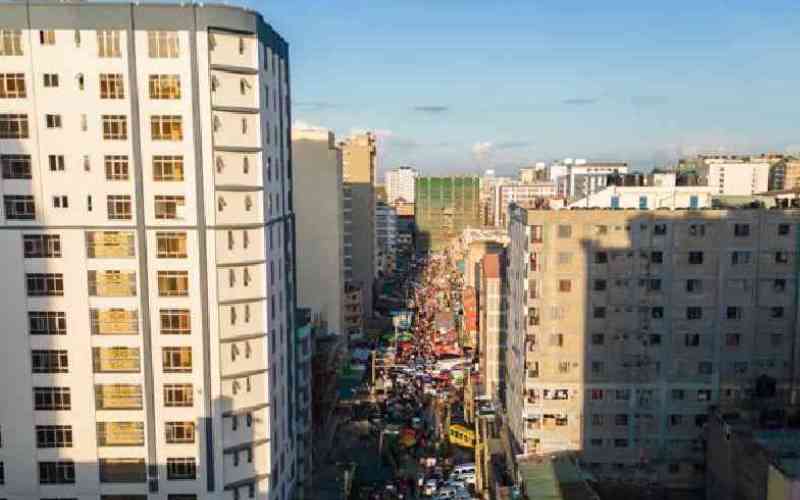
Until the early 1990s, before the fall of President Said Barre of Somalia, Eastleigh was just an ordinary post-colonial settlement boasting of tenement blocks preferred by largely members of the Kikuyu and Swahili communities.
The influx of the two communities had an opposite effect – the exodus of Asians and African elites who lived there during the pre-independence period, when the architecture of the place was characterised by single-story bungalows and detached family houses.
With the arrival of Kikuyus and Swahilis, the bungalows and detached houses started disappearing and were replaced by tenement blocks typically divided into multiple small, low-cost rental units.
With the dethroning of dictator Barre in January 1991, fleeing Somalis engineered a rapid makeover, turning the place into a commercial hub that has earned the tag Little Mogadishu.
Notably, the history of this famous neighbourhood is intertwined with the adjacent military camp. In 1940, during World War II, the Royal Air Force (RAF) Eastleigh, now known as Moi Air Base (MAB), was founded with the sole purpose of serving as a military airfield for British colonists.
During the Mau Mau uprising of the 1950s, it was used for aerial surveying and reconnaissance, making the adjacent neighbourhood a preferred settlement for Indian clerks, tradesmen, and elite African workers attracted to the address by the presence of the military air base that guaranteed a sense of security.
The tranquillity of the place would soon be tested when the Somalis started arriving in droves. Today, Eastleigh of the past, established in 1921 by British settlers, has been replaced with skyscrapers dominating the skyline.
Unfortunately, the massive transformation has come with attendant challenges. An estate that was regarded as one of the safest in the city in the post-colonial era is now dogged by rampant crime and drug consumption among the youthful population that keeps bulging, compounding the problems further.
Insecurity and drugs have proven to be major challenges, giving police sleepless nights as they try to deal with the evolving threats amid a Somali community that prefers the Maslaha system.
This approach mirrors restorative justice as much as it is preferred for enabling harmony and co-existence; it silences victims and shields perpetrators. This system discourages an offender from being arrested and taken through the justice system. Instead, elders negotiate for out-of-court settlements.
“It is a challenge fighting insecurity in this place (Eastleigh). We have had instances of murderers walking scot-free following the intervention of elders who summon and mediate between the parties involved,” said a senior officer initially based at Pangani Police Station.
The officer decried how efforts to tackle the drug challenge were being thwarted by elders who intervene whenever those involved are arrested. “The elders even go to higher offices for intervention. The Somalis believe that their own, even when wrong, should not be arrested or incarcerated,” added the frustrated officer.
As the Maslaha system frustrates police efforts to flush out wrong doors in Eastleigh, the drugs menace is wasting away several youths who are hooked to narcotics, whose main distribution artery is traced to neighbouring Pangani estate.
Ahmed Abdullahi, chairman, Eastleigh Business District Association (EBDA) the twin drug and insecurity challenges are a thorn in the flesh for the community, which is tirelessly working with law enforcement to weed out criminals and drug addicts.
About two weeks ago, a consensus was reached to have at least 40 elders who have been mandated to deal with the insecurity and drug problems in their jurisdictions.
“Insecurity and the drug issues can no longer be swept under the carpet, and that’s why we have selected the elders to try to control and monitor these young men engaging in the vices. Eastleigh is cosmopolitan, attracting foreigners from Ethiopia, Congo, Tanzania and even China but with the prosperity comes threats,” said Abdullahi.
In a bid to address the challenge, leaders are trying to mobilise members of the Somali community to speak in one voice when confronting challenges facing them. He attributed part of the drug menace to mushrooming miraa kiosks where psychotropic substances are sold in secret.
“And very soon, we shall invite the Kenya Editors Guild for a hands-on experience tour in the area. We want Eastleigh to be cast as a beacon of prosperity despite the persistent threats,” noted Abdullahi.
A pointer that the insecurity and drug challenges have reached alarming levels, Nairobi Regional Police Commander Issa Mohamed recently led a team of senior officers for a meeting with local leaders at Urban Hotel in the area.
Top on the agenda was emerging criminal gangs, drugs and substance abuse, traffic congestion and management. Issa vowed that under his watch, he would make sure the security challenges are addressed, and urged residents to co-operate with his officers.
But two months later, the situation has not improved. On July 14, 2026, members of the Super Power gang armed with knives unleashed a wave of terror within the Ushirika area, where several residents were attacked.
Police managed to arrest five young suspects who were identified as Ibrahim Abdilah, Zacharia Musa, Hamza Ahmed, Zuhaid Mohamed and Muhamed Osman.
Eastleigh has also witnessed a share of kidnapping incidents, either targeting children or business people, with one of the most recent cases involving a 16-year-old boy who was abducted by five young men on May 29.
Armed with knives, the criminals assaulted the victim before bundling him into a getaway Suzuki car. The gang then called the boy’s father, demanding a Sh500,000 ransom in exchange for his freedom.
Officers at Pangani Police Station swung into action, tracing the gang within Pangani Heights, where the boy was rescued from a locked Toyota Rectis car parked in the basement of the apartment.
Inside the car were two suspects identified as Adnan Sadiq and Abdirahman Abdi, while Khadar Gelle and Abdirahman Sadiq, who were found with the victim’s mobile phone, were tracked and arrested in the Suzuki car that was parked some distance away. The driver of the vehicle, Fahad, managed to escape.
The four suspects were taken to the station, where they were booked with the offences of kidnapping, assault, and demanding money by menace in an incident that laid bare the connection between Pangani and Eastleigh.
Pangani is considered the nerve centre for drugs that are ferried to Eastleigh, where there is a ready market.
On April 26, 2026, undercover officers raided a shop within Pangani shopping centre and arrested Simon Mwendwa, who was found selling psychotropic substances.
Among the drugs recovered from his shop were 70 rolls of cannabis sativa, 155 diasperm tablets, 10 rohypnol tablets, 100 millilitres of godine syrup, 58 pieces of shisha, 30 pieces of velo nicotine, and 33 pieces of vape shisha.
Once a thriving neighbourhood of hardworking families, Pangani now faces a silent epidemic that is stealing its future one child at a time. One of the major factors fueling the drug problem is money wired from abroad.
According to Sumeiya Ali, drug consumers are young Somali men and women flown from the United States of America and parts of Europe by their parents and relatives keen to have them “cultured and socialised” the Somali way.
“The culprits are not foreign cartels or mysterious traffickers. The danger sits behind glass counters, in plain sight, wearing white coats and operating under legitimate licenses,” says Sumeiya, a local activist.
Eastleigh is considered a “correction and rehabilitation centre” for parents raising their children in the US and Europe. Children or youth who find themselves on the wrong side of the law are airlifted to Nairobi under the guise of internalising the Somali culture.
And without close monitoring, these youth who live in rented apartments end up being deviants. It is said that the upkeep money sent to them is used on drugs and leisure.
“Their families, desperate and disconnected, believe that sending them back home will fix what is broken. But there is no rehabilitation here. No structure. No oversight. They have money wired from abroad, with no parents watching, with no schools requiring their attendance. And they have freedom without responsibility,” says Sumeiya.
According to her, the confidence of these young men is striking. They move through Pangani as if rules do not apply to them. Yet back in the West, certain vices carry consequences. “Here, they discover that everything is accessible,” she notes.
More worrying is that young school-going children are being exposed to drugs, which are consumed in apartments where the youth gather.
“A child cannot walk to school, buy bread, or return home without the temptation. Soon, the pressure builds, some drop out of school, and start hanging out with the new crowd,” says Sumeiya.
Allegedly, some chemists have abandoned their ethics, and boda boda riders, once just transport workers, have become the delivery network. “A quick call, a quick drop. Everyone is eating,” laments Sumeiya.
However, a local administrator, while acknowledging the drug menace remains a headache, said it was not all bad in Pangani shopping, which is a major depot for miraa from Meru.
“The drug problem is in a place known as Nigeria, which borders Pangani, Mathare and Eastleigh. That place is notorious for all kinds of drugs, and we have tried in vain to cut the supply chains,” said the administrator who requested to remain anonymous.
Last year, officers at Pangani Police Station were left frustrated after four notorious drug dealers were let off the hook after being taken to Makadara, where a court released them after each of them paid a Sh10,000 cash bail (confirm from Mutuma).
The suspects who operate chemists at the Pangani shopping centre were found selling prohibited drugs. Despite the officers formally complaining to the Pharmacy and Poisons Board (PPB), their dissatisfaction with the manner in which the court handled the case was ignored.
Yet concerned residents continue to express their disappointment at how their neighbourhood has become a conduit for drugs.
“The police try. Some of them genuinely try. But they are outnumbered, outmanoeuvred, and in some cases, out-bribed. The system they work within is broken. They catch a dealer; three more appear. They shut down a chemist; it reopens under a different name. They raid a shop; the pills have already been moved,” laments Sumeiya.
She connects the problem to miraa shop owners, who allegedly enjoy strong political protection. “No one touches the miraa business in Pangani. But behind the bundles of khat, other things move; pills like codeine hidden in corners,” says Sumeiya.
Without money to sustain consumption habits, most consumers and addicts resort to crime – they steal from their families and neighbours, break into houses or commit violent robberies.
“The enemy is not wearing gang colours anymore. It wears a white coat. It rides a boda boda. It wires money from abroad. It hides behind political connections,” notes Sumeiya.
Girls are not spared. Some trade their bodies for pills. Others are preyed upon when they are too high to say no. The drugs steal their alertness, and predators know it.
“The vices multiply like cockroaches after rain. Once drugs enter a community, they bring their whole family: theft, prostitution, broken homes, madness, and finally, the grave,” adds Sumeiya.
Subscribe to our newsletter and stay updated on the latest developments and special offers!