×

The Standard e-Paper
Read Offline Anywhere





Audio By Vocalize
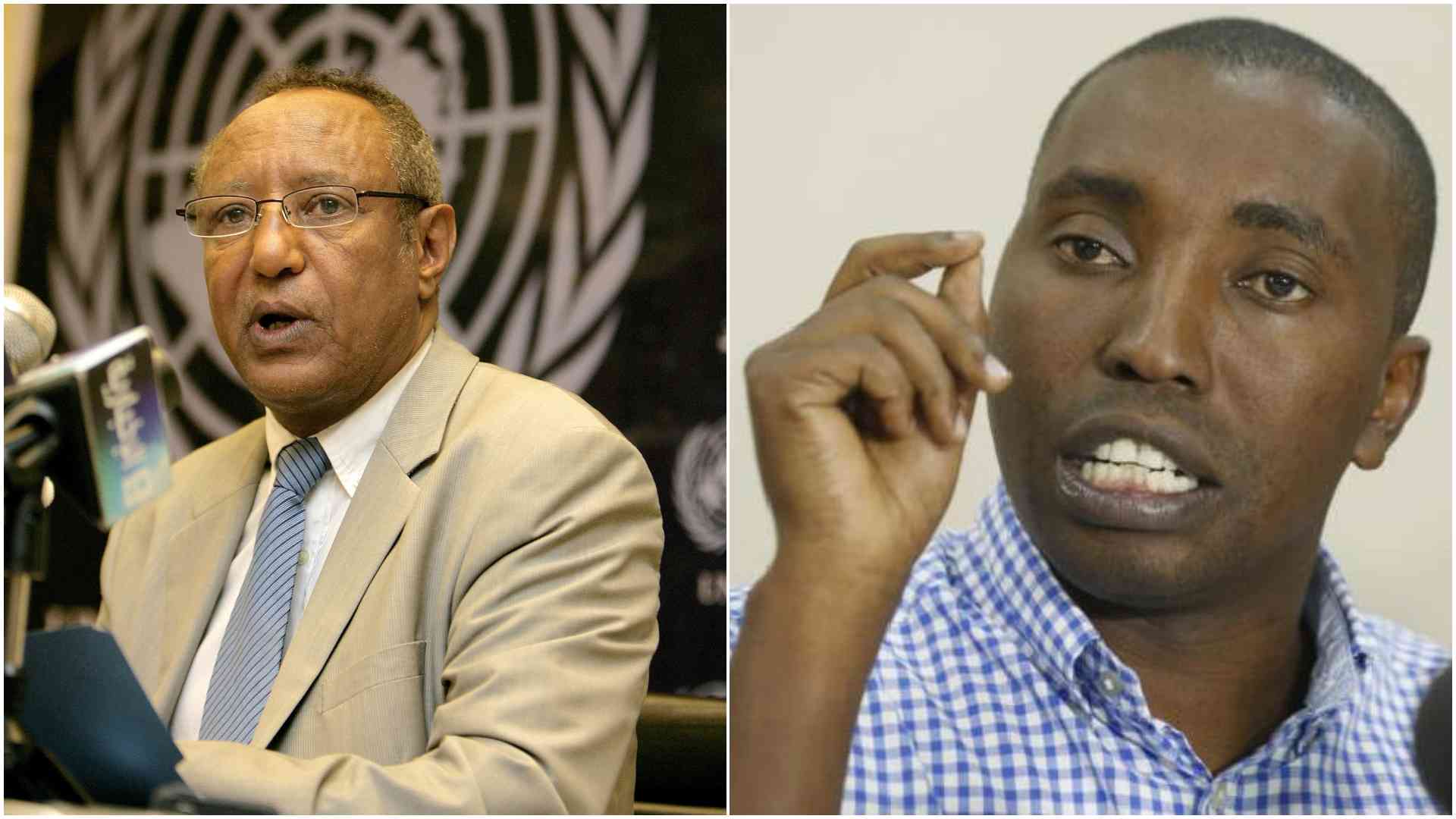
A retired United Nations official has accused a close ally of President William Ruto's of conning him out of Sh320 million in a bogus investment scheme allegedly involving Department of Defence (DoD) tenders.
According to court documents, Haile Menkerios, a former senior UN diplomat, claims that politician Francis Mureithi duped him into investing millions in what turned out to be fictitious government contracts. Mureithi later admitted in court that the purported DoD tender never existed.
In 2016, while still serving as the head of the United Nations Office in Ethiopia and preparing for retirement, Menkerios decided to venture into business with Abeba Weldehaimanot, a Kenyan of Eritrean origin and his close friend of 40 years.
On April 28, 2016, Weldehaimanot introduced Menkerios to Mureithi and his associate, Francis Mwaura, at her Kilimani apartment. Also present was Hussein Osman, another of Weldehaimanot's friends, who vouched for Mureithi as a reputable businessman handling lucrative tenders for the DoD.
During the meeting, Mureithi claimed he had a multimillion-shilling contract to supply the DoD with beans and rice, as well as another deal with Mumias Sugar Company to deliver 30,000 bags of sugar per week for onward sale to the DoD or the open market.
Trusting the assurances, Menkerios agreed to invest. A joint venture agreement was quickly drawn up, under which he would provide USD 235,000 (approximately Sh25.8 million) as capital. He was to receive repayment plus USD 23,500 (approximately Sh2.6 million) in profit.
Two days later, Menkerios transferred the funds to Weldehaimanot's account for onward transmission to Mureithi's company. Mureithi confirmed receipt, and the partnership began.
However, before the first deal could proceed, Mureithi claimed he had secured another, more lucrative tender. He persuaded Menkerios to reinvest the capital and expected profit into this new venture, promising a 30 per cent return, up from the initial 10 per cent.
On May 17 2016, the two signed a new contract reflecting the increased investment of USD 618,000 (approximately Sh68 million). A joint company was incorporated, with all parties holding shares proportional to their contributions. Funds were to flow from the joint venture to Mureithi's firm, which supposedly held the DoD contracts.
Soon after, Mureithi told Menkerios that Mumias Sugar required a USD 1 million (approximately Sh110 million) guarantee. Menkerios agreed and wired the funds.
The following months saw further demands. Mureithi claimed to have obtained an Export Processing Zone (EPZ) lease to build and operate a weighbridge but lacked capital. He asked Menkerios to invest Sh5.25 million in shares for the new project.
When Mureithi later proposed buying out another company with the required capital, Menkerios again agreed, releasing Sh11 million for the acquisition.
Before long, another alleged tender emerged, this time to supply tea leaves to the DoD. Menkerios sent USD 160,000 (approximately Sh17.6 million) to Mureithi's company. But by now, after sinking millions with no returns, Menkerios began to grow suspicious.
Repeated requests for payment were met with excuses: from DoD delays to IFMIS glitches. The cycle continued for months, even years, before Menkerios sought legal redress.
On May 2, 2018, he filed a civil suit at the Milimani Commercial Courts, seeking USD 4.9 million (approximately Sh541 million) in investments, profits, and interest. The case initially went undefended, earning Menkerios a default judgment, but Mureithi later moved to have it overturned.
In his defence, Mureithi denied ever meeting Menkerios or inducing him into any agreements, and being a director of Doc Find Ltd, the company that received the funds. He denied having "any idea of the nature and circumstances leading to the transactions." Intriguingly, he did not deny receiving money from the Eritrean.
He described the Eritrean diplomat as "deluded" and most of his claims as "fertile imagination." By that time, Mureithi had resigned as a director of Doc Find Ltd and transferred his shares to a Chinese national who could not be traced in trial.
During testimony, Weldehaimanot told the court that Mureithi had boasted of close ties with then President Uhuru Kenyatta, even claiming to have accompanied him on a trip to Israel.
DCI investigation
Mureithi has since aligned himself with President Ruto and unsuccessfully contested a parliamentary seat on the UDA ticket in 2022.
Both Mureithi and Mwaura testified that the alleged DoD and Mumias tenders never existed, insisting that the transactions were designed to help Menkerios discreetly transfer funds into Kenya for his own purposes, allegedly to fund a presidential campaign in Eritrea.
According to their witness statements and oral evidence, Menkerios did not want the UN system to know and so they devised a scheme to pass the money as investments.
"I was a broker. He needed money to come in. I facilitated and got my cut. He got his money less my commission," was the summary of Mureithi's testimony in court.
Mureithi's legal team argued that the contracts between him and Menkerios were illegal and therefore unenforceable under Kenyan law, leaving the retired diplomat with no valid claim.
A DCI investigation later revealed that Mureithi used part of the money, around Sh75 million, to purchase shares and properties in Ngong. The investigators recommended that he and Mwaura be charged with obtaining money by false pretences.
In his statement to the DCI, Mureithi acknowledged the email communications but said they were all a ploy to cover for the illegal deals of moving money around.
On November 8 last year, Justice Frida Mugambi agreed with Mureithi's group, dismissed the civil suit, and declared the series of transactions illegal.
"It is unreasonable to believe that a prudent investor would inject such a substantial amount of capital without clear documentation or understanding of the venture's nature and business opportunity."
Subscribe to our newsletter and stay updated on the latest developments and special offers!