×

The Standard e-Paper
Read Offline Anywhere





Audio By Vocalize
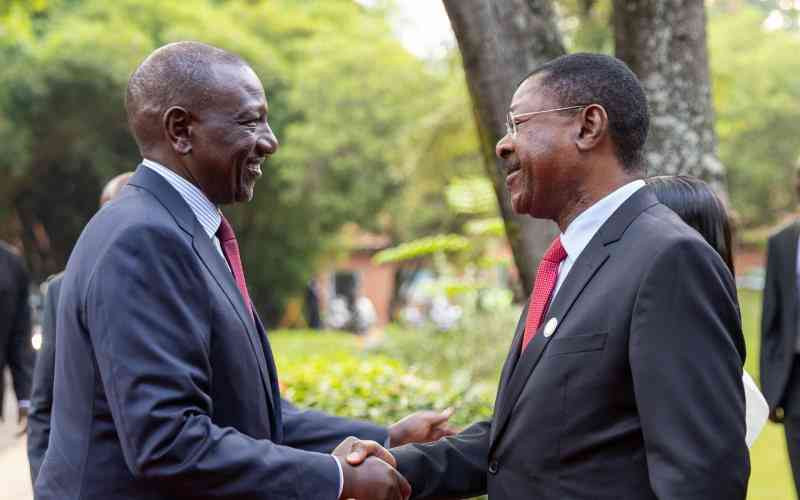
Every year, the manicured lawns of Safari Park Hotel host a massive temporary architectural feat. A sprawling dome marquee is erected, creating a climate-controlled sanctuary insulated from the chaotic dust of Nairobi. The acoustics within this expansive tent are absolutely perfect.
The sharp jagged edges of the political rivalries in Kenya are softened by the sounds of a hymn being sung by all people under the high canvas top. Bitter political opponents practically rub elbows while they pass each other salt, holding hands, and bowing their heads in a very public display of spiritual unity. Their voices, which exchanged extremely rude, toxic rhetoric on the political campaign trail just a week earlier, now merge to create a sense of national unity.
It's an amazing sight. However, we, as people of faith, also have a huge responsibility to God and to others to carry out this devotion with extreme fidelity and spirituality in order to remain faithful.
There is a basic disconnect between the acoustic nature of harmony and the structural resonance nature of harmony. The tragedy at the annual Kenya National Prayer Breakfast is not because the leaders of our nation do not have the ability to pray. It is because as soon as the engines of their vehicles in the parking lot start running, they create a massive institutional damping (noise) inside of the tent where the event is held.
We have perfected the ability to create the acoustical environment of the temporary structure that we build for the event. However, we have failed to create the ability to execute the physical creation of the permanent structure (the altar). By Friday morning, the tent is removed and taken away, which means that the temporary illusion of Kenya being a cohesive country has also been removed.
The true test of whether we are all truly sober spiritually is to look beyond the performance (theatre) of the cross-aisle hugs that take place during this event and ask ourselves if the act of exchanging embraces is simply a way for everyone to show off and just get a quick fix of forgiveness (cheap forgiveness).
The Scripture gives us clear descriptions of how to engage in hollow fasts. For example, in Isaiah 58:3-4, God gives leaders an incredibly courageous rebuke: They fast, but then they exploit workers and strike others with wicked fists. In doing so, He makes it very clear that He is not going to be the junkyard (someone who has to clean up the mess created by governmental poor performance).
There is no such thing as a magical escape clause for administrative poor performance if someone's prayer is accompanied by an "Amen" in a luxury venue. When prayer is disconnected from responsibility, it stops being genuine intercession. Instead, it becomes an anaesthetic used by the privileged to numb their conscience while the populace suffers because of the systemic inertia that politically applies to them.
Tomorrow's prayer breakfast must be more than a breakfast menu of expensive political optics; the prayer items must change from vague, comfortable platitudes to concrete, severe objectives. A summary of our leaders' specific agony should be offered as intercessory prayer on behalf of our Nat ion's institutional heart.
First, we must pray that the leaders will receive grace in the form of institutional restraint. As the Independent Electoral and Boundaries Commission begins to lay tracks for the 2027 election cycle, the country is already experiencing the chaotic/radiating vibrations of early campaign rhetoric.
It is spiritual schizophrenia to pray for the Republic, while at the same time creating instability to the Republic by damaging public trust. Prayer under the altar should be for the leaders to have the fortitude to subordinate their personal ambitions for the fragile stability of the Republic.
Second, we must collectively intercede for economic suffering and develop empathy towards those who are suffering from economic stress. Leaders lose their moral authority when the State creates policies that stretch the limits of household survival. Prayer must be expressed on behalf of the worried single parent who is unable to pay school fees and the business owner being crushed by compliant business regulations/policies.
Lastly, the prayer breakfast should try to address the issue of institutional cynicism that plagues Kenya. There is no greater danger to Kenya than the creeping despair of a citizenry that has lost faith in their institutions to provide justice. We need to pray for the restoration of public integrity in this country so that government officials can treat their responsibilities as sacred.
Kenya is not lacking in faith; we are suffering from not putting our faith to work. Genuine reconciliation requires structural frameworks, not just emotional truces. It is time for our leaders to leave the acoustical safety of the tent and allow their prayers to affect the lives of the people they govern.
Subscribe to our newsletter and stay updated on the latest developments and special offers!