×

The Standard e-Paper
Read Offline Anywhere


Audio By Vocalize
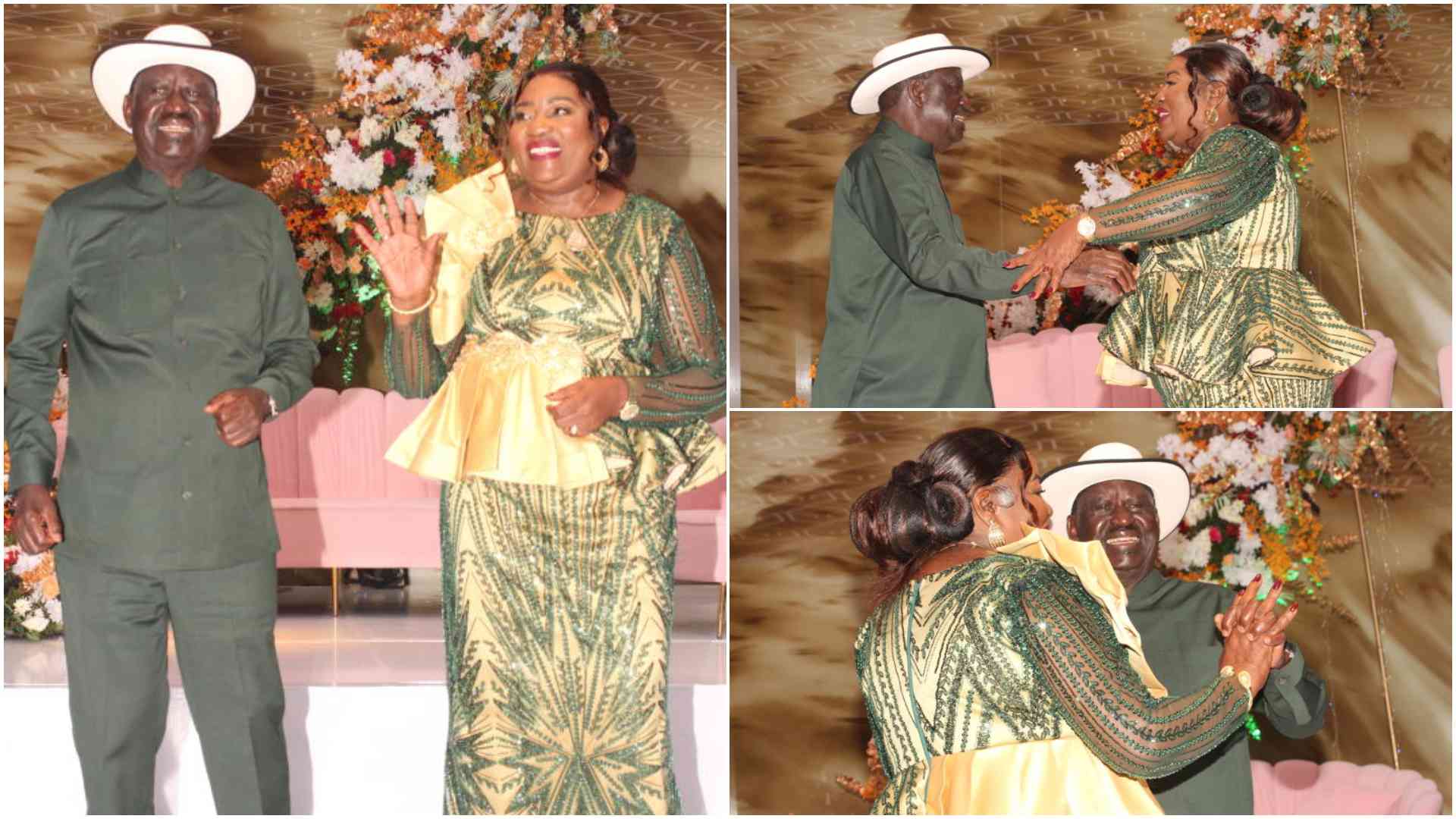
For decades, he was known as the enigma of Kenyan politics, a man of resilience, charm, and boundless conviction. Yet beyond the rallies, the thunderous chants of "Baba!", and the hard-nosed political battles, Raila Amolo Odinga was, at heart, a romantic.
In 2023, while celebrating his 50th wedding anniversary to his lifelong partner, Mama Ida Betty Odinga, he described her as "the bedrock and pillar of our family".
"Being married to you for five decades has brought me great joy," he said at the Villa Rosa Kempinski, where the occasion also marked Ida's 73rd birthday. "Please accept my heartfelt gratitude for being not only the love of my life but also the foundation of our family." His words melted many hearts, a tender moment that revealed the man behind the political legend.
Norah Mutisya wrote: "Wale mnasema marriage ni ufala mtajitetea mkiwa upande gani? These two were the epitome of love and loyalty. Yaani wamependana for years and years. Rest well Jakom, Mama Ida loves you."
Raila met Ida in 1973 while he was a tutorial fellow at the University of Nairobi. Ida, then pursuing a Bachelor of Education degree, struck him as different: a tall, elegant beauty whose confidence and intellect captured his heart instantly.
Raila's cousin is married to Ida's cousin and so he had accompanied his cousin to visit Ida's brother in Pangani. That is the first day he saw her and he told his cousin that he would like to see Ida again.
Their friendship blossomed quickly, and by 1974, they had solemnised their union in church.
After graduation, Ida taught Geography at Kenya High School, where her students remember her as firm but motherly. By the time Raila was detained in 1982, the couple had three children: Fidel, Rosemary and Raila Jr, and later welcomed their youngest, Winnie, in 1990.
Through the dark years of detention, when Raila was locked away without trial, Ida stood unwavering, raising their family alone and fearlessly petitioning the courts through a habeas corpus suit demanding that her husband be produced alive.
In his biography Flames of Freedom, Raila credits Ida's persistence for saving him from further torture in the dungeons of Nyayo House, experiences that permanently affected his eyesight.
As Ida battled eviction from Kenya High staff quarters and dismissal from her teaching post, she turned to small business ventures, embodying the quiet strength of a woman who refused to break.
The final chapter
The former Prime Minister died at Ayurvedic Eye Hospital and Research Centre at Koothattukulam in Ernakulam district of Kerala, Kochi province, in the southern city of India. He was 80. He suffered a cardiac failure during his morning walk on the campus.
Raila collapsed at around 9am, according to the authorities of the hospital. He was rushed to Devamatha Hospital in Koothattukulam, where he was pronounced dead at 9:52am. He had been under treatment at the facility for the last five days.
Raila and his family had been visiting the hospital, which had earlier helped his daughter regain her vision, for some time. He was accompanied by his daughter and personal doctor on the trip to India. According to Indian news outlet, Mathrubhumi, a police officer said that information regarding Raila's death had been conveyed to the Foreigners Regional Registration Office (FRRO) for necessary procedures as per protocol.
Rumours of Raila's passing started at 9am and gained traction after sources close to State House intimated that Oburu Oginga had been called for a meeting in Nairobi. An hour later, The Nairobian independently verified from family sources that Raila had indeed passed on. Two hours later, by 11:30am President Ruto's convoy arrived at Raila's Karen home where he addressed the nation.
Raila's decision to seek treatment in India stemmed from an incident in 2021 when his 47-year-old daughter Rosemary gained sight after treatment at the Ayurvedic eye hospital. The hospital is located in the Koothattukulam area of Ernakulam.
Following his daughter's recovery, Raila personally travelled to India in February 2022 to thank staff and doctors at the hospital. Rosemary had completely lost her sight in 2017 following optic nerve damage. Treatments done in South Africa, Israel, and China were futile.
Raila's life has been a rollercoaster since 1982 when junior Kenya Air Force solders organizied the coup that would. The officers, led by Senior Private Hezekiah Ochuka and Pancras Oteyo approached Jaramogi Oginga Odinga, Raila's father, for help.
Jaramogi is reported to have told the two soldiers to deal with Raila. What happened after that is subject to speculation. Immediately the coup had been scuttled, police arrested Raila Odinga.
He was then the Deputy Director at Kenya Bureau of Standards (KeBS). He joined KBS in 1974 and was instrumental in laying the foundation that the agency was built on and has continued to grow. He was charged with treason and remained in detention without trial for six years, until February 1988. Upon his release, he joined the forces agitating for introduction of multiparty politics in Kenya.
He would be detained again in September, seven months later where he remained until June 12, 1989. On July 5, 1990 he was picked up again and detained together with Kenneth Matiba and Charles Rubia until his release on June 21, 1991. This time he must have had a very different experience in detention. Upon his release, he fled to Norway through Uganda.
Raila returned from Norway in 1992 and launched his bid for the Langata parliamentary seat. President Moi had bowed to pressure and Section 2A, the law making Kenya a one party state was repealed. Elections were slated for December 1992 and Raila won the Langata seat as his father clinched the Bondo parliamentary seat on Ford-Kenya ticket.
Jaramogi lost the presidential elections to Moi. Thirteen months later, on January 20, 1994, Jaramogi died in Kisumu.
The death of the senior Odinga ushered in the second phase of Raila's political journey. He became Tinga.
Michael Wamalwa Kijana, who was the first Vice Chairman of Ford-K was the presumptive heir in the party. James Orengo was appointed his deputy and Raila remained as Director of Elections.
What followed is a script for a blockbuster political movie.
Anglican Church Archbishop Manasses Kuria was called in to arbitrate leadership wrangles in the party pitting, mainly Raila against Wamalwa. In the end, it was agreed that the party would hold a delegates' conference at Thika Stadium to elect the chairman. The election was not held as violence erupted and people scampered for safety.
One Omondi Oludhe would come to Raila'a rescue by making available the National Development Party (NDP). Raila did what his father did in 1966 when he led a walkout from Kanu and got a few of his supporters elected on Kenya peoples' Union. He ditched Ford-K and resigned from Parliament. Before that, since 1992, MPs had only resigned from the opposition to seek re-election on governing party Kanu ticket. Raila ditched an opposition party for another opposition party.
The government laid own machinery to make sure that he doesn't win back his seat. Raila would trounce the government backed opponent and win back his seat. This was the beginning of his name, Agwambo, a man who could maneuver his way around President Moi's machinery.
He returned to Parliament and Luo MPs slowly began to coalesce around him. Only three prominent Luo leaders: Achieng' Oneko, James Orengo and Peter Anyang' Nyongo remained in Ford-K. Come 1997 and Raila decided to go for the presidency. He would come in third ahead of Kijana Wamalwa of Ford-K.
Immediately after this election, as Mwai Kibaki who came second and the rest were crying foul that the election was rigged, Raila began talking to Kanu.
In the first of a series of warming up meetings with the government after losing elections, Raila's NDP went into cooperation and later merger with Kanu. The line was that the cockeral, Kanu's symbol, had swallowed the tractor (tinga), NDP's symbol. Moi was serving his last term and Riala must have seen an opportunity to be part of the Moi's inner circle. He was elected Secretary General of New Kanu at the expense of Kanu stalwart Joseph J. Kamotho.
Raila wept
Meanwhile, Moi's idea was to groom Uhuru Kenyatta. When this became obvious towards the 2002 general elections, Raila bolted out of KANU with more members than he went in with. They formed Liberal Democratic Party which joined up with Mwai Kibaki's National Alliance of Kenya that had DP, Ford-K and SDP to form National Rainbow Coalition (Narc). The last two were led by Kijana Wamalwa and Charity Ngilu respectively.
At a Uhuru Park rally, Raila proclaimed "Kibaki Tosha". People say they had not agreed on Kibaki as their candidate, but once Raila says something, that is it. Kanu's candidate Uhuru Kenyatta would lose to Mwai Kibaki in what analysts have said is the only free and fair election to have been held in Kenya. The understanding was Raila would be appointed Prime Minister but Kibaki's men objected to it and he ended up as Minister for Roads.
Then came the third phase of Raila's political life where he became Baba.
The Narc dream died with the referendum for a new constitution in 2005.
Raila led the group opposed to the new constitution, the No side whose symbol was the orange. This side went against President Kibaki's push for the new law, the Yes side symbolized by a banana. The constitution was defeated and Raila and his men were bundled out of the Cabinet. That was the birth of ODM as a party.
The defining moment, and may be the lowest moment in Raila's life, was the bungling of 2007 presidential election. Raila was winning by a huge margin and when Kenyans woke up expecting him to be announced President, Mwai Kibaki had overtaken him. Kibaki was declared winner and sworn in late in the evening. Kenya immediately burst into flames of Post-Election Violence.
Raila wept in public.
In the words of a mourner outside his Karen home: "He didn't just live history, he became it."
Subscribe to our newsletter and stay updated on the latest developments and special offers!