×

The Standard e-Paper
Home To Bold Columnists





Audio By Vocalize
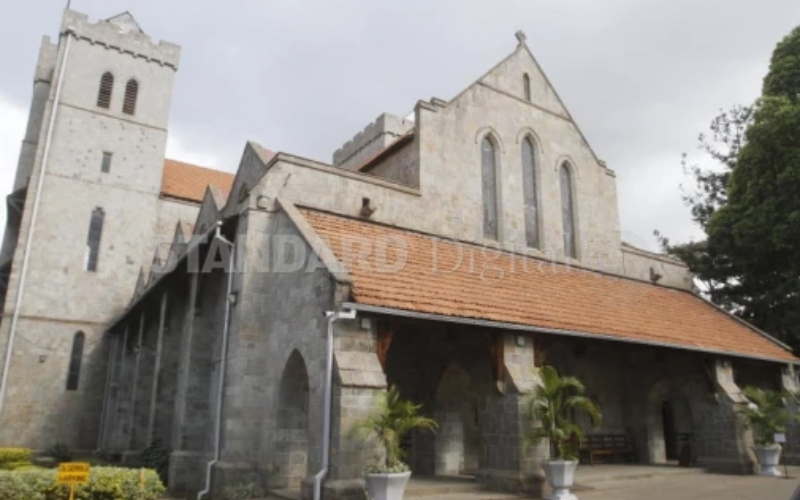
As investigations continue and competing narratives emerge, the disruption of a post-budget forum has sparked fresh questions about civic participation, public accountability and the space for citizens to debate national issues.
Days after suspected goons disrupted a post-budget forum at All Saints Cathedral in Nairobi, the shouting may have stopped, but the questions continue to grow louder.
Investigations are ongoing, additional suspects have reportedly been arrested, and a vigorous public debate has emerged over what exactly was targeted during the dramatic disruption that sent participants scrambling for safety.
In a press briefing after the unfortunate attack on a church, the All Saints Cathedral leadership, led by the provost Rev Evans Omollo, questioned the motive of the heinous act.
Whether this was an attack on the church.
“Was this an attack on the church or on a public forum examining Kenya's 2026/27 national budget?
The incident, which unfolded during a Post Budget Day Forum attended by faith leaders, civil society organisations, governance experts and members of the public, continues to generate intense discussion both online and offline.
Police have confirmed that investigations remain active, with detectives reviewing CCTV footage and pursuing individuals believed to have participated in the disruption.
Emerging footage circulating in media reports appears to show groups of young men entering the church compound before chaos erupted at the venue where discussions on public finance and accountability were taking place.
The attack triggered widespread condemnation from religious leaders, governance advocates and civil society organisations, many of whom described it as an attempt to intimidate citizens participating in public discourse.
However, as investigations continue, a parallel debate has emerged regarding the role of religious institutions in national conversations.
Speaking in a television interview, Belgut MP Nelson Koech reportedly questioned what he described as the church's involvement in political matters, remarks that have since generated considerable discussion across social media platforms and public forums.
But leaders at All Saints Cathedral strongly reject suggestions that the gathering was a political event.
In media interviews following the disruption, Provost Rev Omollo maintained that the meeting under attack was a post-budget forum taking place in a conference facility within the church compound and focused on issues of public finance, accountability and citizen participation.
According to Rev Omollo, the discussions were part of broader efforts by faith-based organisations, civil society groups and citizens to examine the implications of the national budget and encourage public engagement in governance processes.
"The debate did not end with the budget reading," he said, reiterating the church's position that citizens have a constitutional right to participate in discussions concerning public resources and national priorities.
Rev Omollo argued that the disrupted gathering was not a political rally but a public accountability forum examining the national budget and encouraging citizen participation in governance processes.
For participants who witnessed the disruption firsthand, the debate has become about more than the events of a single morning.
Dr Zipporah Ndunge Katunga, a lecturer at the Kenya Institute of Special Education, recalled the confusion that gripped the forum when shouting suddenly erupted.
"In a flash, everyone ran for their dear life," she said in an earlier interview. "Some left behind their personal belongings. For a moment I was completely lost."
Others have questioned what the incident means for the future of civic engagement.
Jerusha Otieno, one of the attendees, said the experience left her shaken and uncertain about attending similar gatherings in the future.
Yet despite the disruption, the forum resumed shortly after calm was restored. Participants returned to their seats. Presentations continued. The discussions went on. And perhaps that is why the story refuses to fade.
Beyond the arrests, the investigations and the competing narratives, the incident has sparked a broader conversation about public participation, civic space and the ability of citizens to gather peacefully to discuss issues that affect their lives.
As detectives continue their investigations, several key questions remain unanswered. Who organised the disruption, and what was the motive? Will the ongoing investigations provide the answers participants are still seeking?
For now, those questions remain at the centre of a story that has evolved far beyond the chaos of that Friday morning.
The forum at the centre of the controversy had brought together a broad coalition of faith leaders, budget analysts, governance advocates and civil society organisations for a Post Budget Day Forum held a day after Treasury Cabinet Secretary John Mbadi presented the 2026/27 national budget.
Hosted by All Saints Cathedral, the meeting sought to unpack the implications of the budget on ordinary Kenyans, interrogate revenue-raising measures, assess the extent to which public views had been incorporated into the final budget and explore opportunities for citizen participation in implementation and oversight.
Among the organisations represented were Bajeti Hub, the Institute of Economic Affairs (IEA), the Institute of Public Finance (IPF), the East African Centre for Human Rights (EACHRights), the Institute for Social Accountability (TISA), the Kenya Human Rights Commission (KHRC), Transparency International Kenya and WeCare Youth Organisation, alongside faith leaders and members of the public.
The programme included discussions on public participation, budget implementation, revenue projections, public monitoring of government spending and sustaining citizen engagement in future budget processes.
Subscribe to our newsletter and stay updated on the latest developments and special offers!