×

The Standard e-Paper
Read Offline Anywhere





Audio By Vocalize

A few weeks ago, you were at State House where you were seen praying during the signing of the Conflict of Interest Bill. Clear the air on your role there?
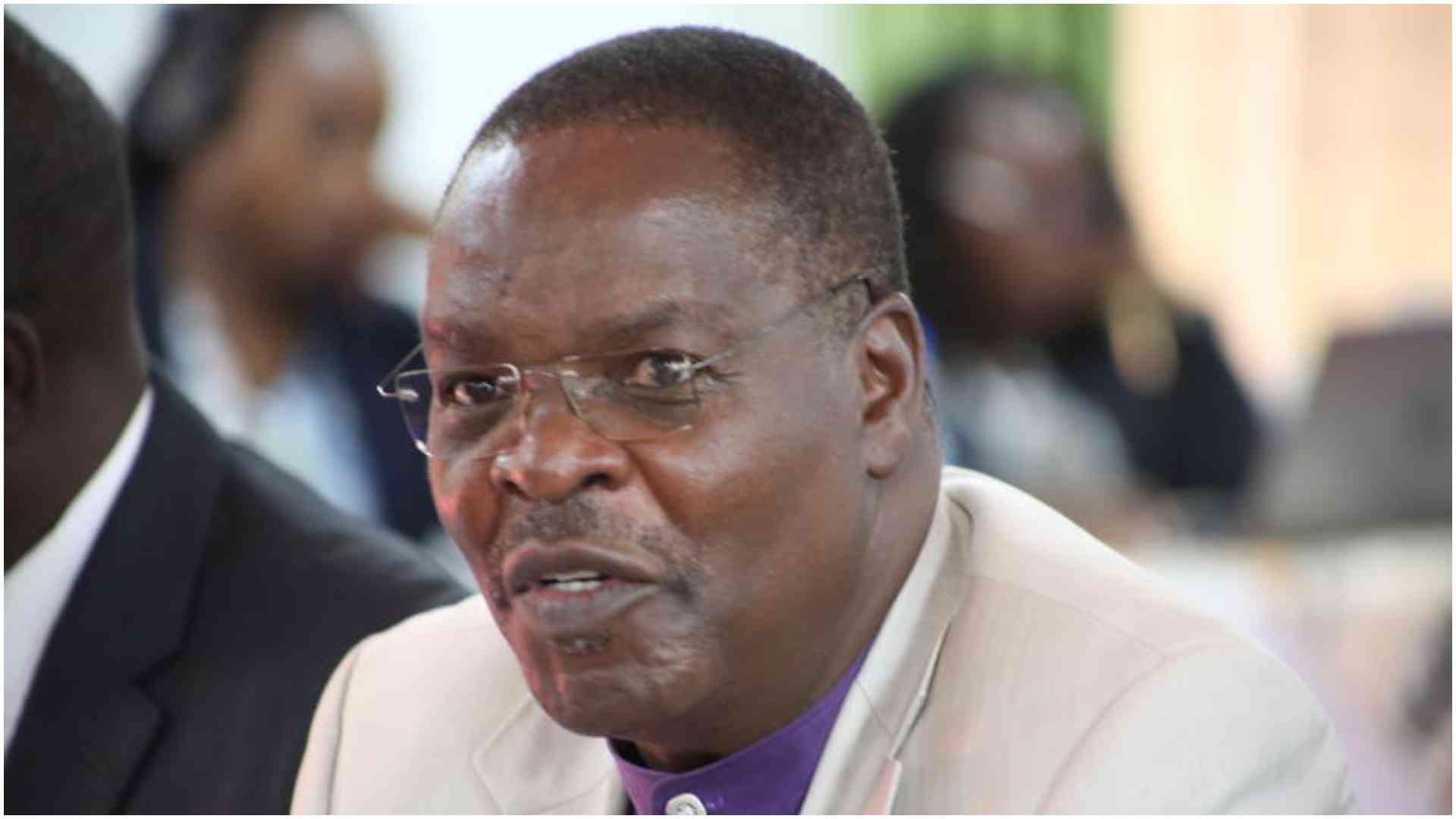
When I was at State House, it was not to present the corruption report. I was there because the President was signing the Conflict of Interest Bill into law. Since EACC will provide oversight on that law, we were invited to witness the occasion. My role was simply to stand beside the President as he signed and yes, to pray, because as you know, in nearly all national functions, prayers are offered.
Why was the event that significant to EACC?
That law is crucial because it directly addresses how public officials should conduct themselves. It makes it clear that government officers should not do business with government.
Since EACC will provide oversight on it, we were invited to witness the signing. I was also asked to pray, and I prayed scripture. My prayer resonated with many Kenyans because it spoke to the frustration people feel about corruption.
In that prayer, you seemed to suggest that those who defy the law should face dire consequences. Were you calling for divine judgment?
Exactly. God does not change. What happened in biblical times still applies. People who conspired to steal or defraud faced consequences.
In Kenya today, corruption has become normal, even celebrated. My prayer was simply asking God to intervene where we as human systems continue to fail.
Some interpreted your words as asking God to punish corrupt leaders severely, even fatally, as in the Bible. Was that your intention?
God does not change with time whether in 2025 or thousands of years ago. I've seen modern parallels: families, couples, and individuals who collude to steal public money.
The consequences may not come immediately, but they do come. My prayer was simply that if we cannot enforce the law consistently, then may God Himself intervene.
Yet that prayer struck a chord with many Kenyans. It went viral online. Did you expect such a reaction?
On that day, my prayer was in the context of the Conflict of Interest Act, which makes it illegal for government officers to do business with government. My prayer was that we should live by the standards we ourselves have set. But I also drew from biblical examples of families and individuals who conspired in corruption and faced God's judgment.
It resonated with Kenyans because deep down, people are tired of seeing corruption go unpunished.
About corruption perception surveys, why is publishing such reports important for the country?
We are required by law to update the nation on the state of corruption. Through our research department, we conduct surveys across the country and then make the findings public. It's a way of letting Kenyans know where we stand and, hopefully, spurring action on what can be done.
In your latest report, what picture emerged on graft in the country?
It is grim. The survey showed that corruption is pervasive across many sectors from a villager being extorted Sh200 by a chief, to billions lost in procurement fraud at the national level. But for the poor, that Sh200 is everything; it's the difference between eating and sleeping hungry. For the elite, billions are taken as though they were pocket change.
So is Kenya doomed to live with corruption forever?
Interestingly, our data showed that 69 per cent of Kenyans neither asked for nor offered a bribe. So the majority of Kenyans are not corrupt. The real problem is a small group whose actions cause immense damage to the entire nation.
They don't see that the billions lost could have built hospitals, equipped schools, or repaired roads. Instead, they admire those who steal. Until we stop celebrating corruption, until citizens refuse to elect thieves, we will remain stuck. EACC will continue to fight within the law, but real change depends on Kenyans themselves.
But Kenyans themselves seem to reward corrupt leaders by voting them into office. Isn't that contradictory?
It is, and frankly, it baffles me. EACC investigates, arrests, and takes suspects to court. But at the ballot box, it is Kenyans who put them back into office. Then the same Kenyans turn around and blame EACC for corruption. It's illogical.
The truth is; we love corrupt people. We celebrate unexplained wealth. A clean candidate may not even get three votes, while a corrupt one wins with a landslide. It is crazy, but that is our reality.
Some argue EACC has more bark than bite. Corruption cases drag for years, and many suspects walk free. Is that fair criticism?
I understand that perception, but here is the reality - the legal framework is the real stumbling block. Corruption cases start at the magistrate's court, then go through the High Court, Court of Appeal, and finally the Supreme Court.
That process can take 10 years. In that time, a politician can complete a term, seek re-election, and even win again. Until the legal framework is reformed, the punishment for corruption will remain elusive.
So where does that leave Kenyans?
With a choice. The majority are not corrupt, but if they continue voting for the few who are, then they are complicit. EACC will continue to investigate and prosecute, but citizens must stop celebrating corruption and demand accountability. Only then can Kenya break free from this culture where corruption has been normalized.

You work with other agencies among them, Office of the Director of Public Prosecutions (ODPP), the police and the judiciary. Why does it often seem like there is no synergy?
Because the law sets a very high threshold. We investigate, then forward cases to the DPP. If satisfied, the DPP prosecutes. But remember, under the Constitution, a person is innocent until all appeals are exhausted up to the Supreme Court.
That means even someone convicted at the lower courts can still run for office until the final verdict.
We, as Kenyans, wrote and passed that Constitution. So sometimes, our hands are tied by the very laws we made.
Finally, you are both a preacher and an anti-graft crusader. Do you think Kenya needs more laws or more prayers?
We need both. Laws are important, but laws without moral conviction are useless. You can have the best Constitution, but if people celebrate corruption, the law will not save you.
That's why I pray, and that's why I fight corruption legally. Kenya needs a moral awakening to say enough is enough. Only then will corruption stop be being normal.
Subscribe to our newsletter and stay updated on the latest developments and special offers!