×

The Standard e-Paper
Join Thousands of Readers





Audio By Vocalize
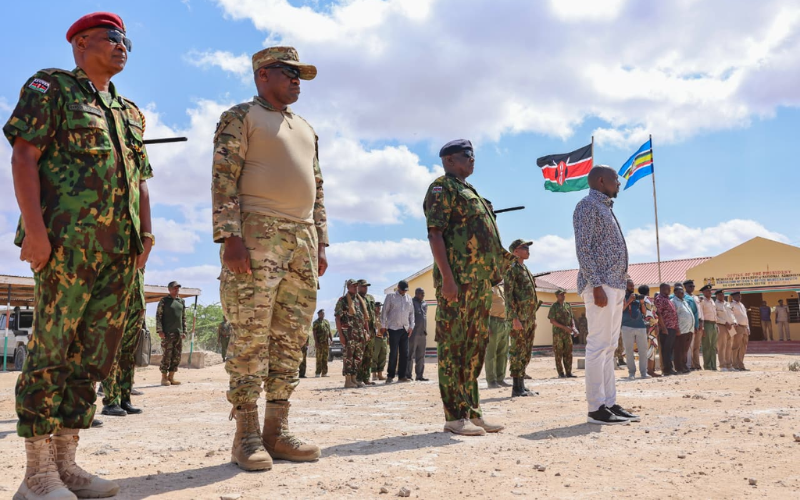
Interior Cabinet Secretary Kipchumba Murkomen arrived in Mandera County under heavy security for his routine Jukwaa La Usalama tours across the country.
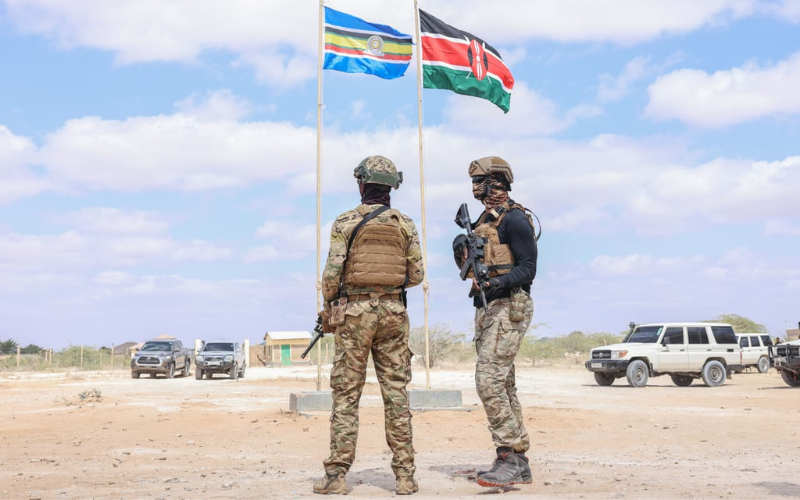
Photos shared on his social media pages show a battalion of heavily armed officers keeping sharp watch as Murkomen engaged residents and leaders.
Among top security chiefs accompanying him were Inspector General Douglas Kanja and Deputy Inspector General (APS) Gilbert Masengeli.
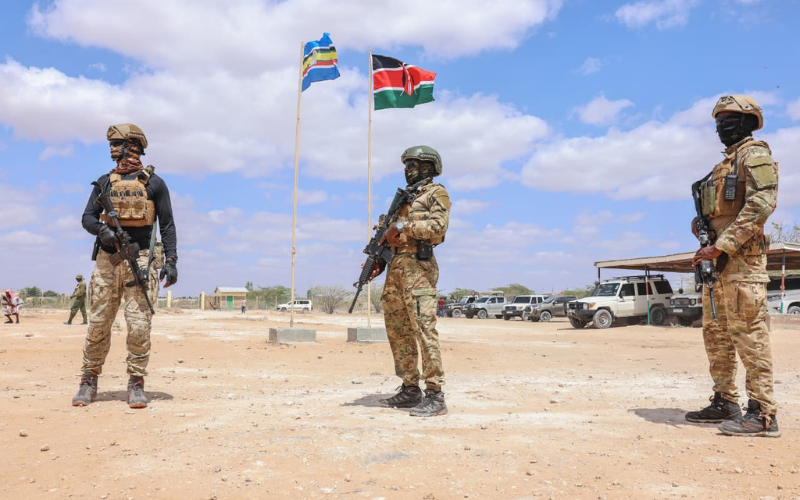
The officers, identifiable by their combat gear and advanced weaponry, are believed to be from the Special Operations Group (SOG) - an elite multi-agency unit under the Border Patrol Unit whose core mandate is protecting Kenya's borders and countering terror threats.
The SOG ranks among the country's most highly trained police formations, alongside the Special Recce Team (SRT) and Special Weapons and Tactics (SWAT). Its intensive six-month training programme is so demanding that only about five per cent of recruits complete it.
"Out of every 2,000 recruits, only about 100 graduate. What that 100 does is equal to what 10,000 would do in ordinary circumstances," Deputy President Kithure Kindiki revealed during his tenure as Interior CS.
Online, Kenyans were quick to notice Murkomen's security entourage. Some questioned the contrast between leaders' protection at home and abroad.
"In a foreign country, they walk freely without security, but in their own country, they are accompanied by heavy security," wrote Salim Suleiman on Facebook.
"Forgetting many Kenyans live there with no heavy security," added another user, Mca Oscar.
Murkomen's heavy security show comes just days after President William Ruto's photos in New York stirred debate.
Ruto, attending the 80th United Nations General Assembly, was spotted walking casually in the streets of New York City with only a handful of aides and guards - a stark contrast to the siren-blaring motorcades that accompany him locally.

Ordinarily, presidential motorcades are highly standardised and complex systems designed to ensure the absolute safety of the head of state.
They typically feature an armoured presidential car, support vehicles carrying close protection officers and staff, an ambulance, and police outriders to clear traffic.
Abroad, however, Kenyan leaders often opt for leaner and less conspicuous security details, keeping away from the showy and forceful entourages seen back home.
Subscribe to our newsletter and stay updated on the latest developments and special offers!