×

The Standard e-Paper
Join Thousands of Readers





Audio By Vocalize
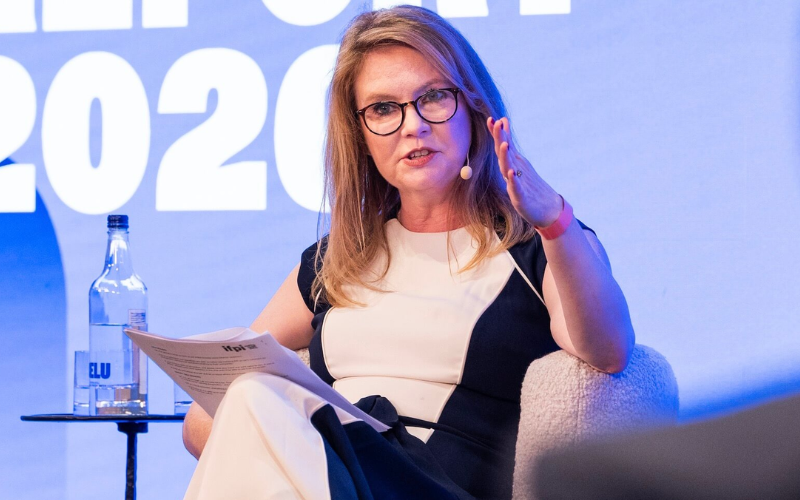
When Victoria Oakley speaks about the future of music, she is not talking about celebrity culture or chart-topping hits.
She is talking about copyright, technology, investment and the policies that determine whether artists are fairly paid for their work.
As the Chief Executive Officer of the International Federation of the Phonographic Industry (IFPI), the global body representing the recorded music industry, Oakley sits at the centre of conversations shaping the future of music worldwide.
IFPI represents the world's leading record companies, including Sony Music Entertainment, Universal Music Group and Warner Music Group, alongside more than 8,000 independent labels in over 70 countries.
This week, CEO Victoria Oakley visited Kenya for the first time, leading meetings with government officials including President William Ruto, regulators and industry players.
She described Kenya as one of Africa's most promising recorded music markets, citing its young, digitally connected population, rich musical talent and growing streaming culture.
According to IFPI, recorded music revenues in Sub-Saharan Africa grew by 15.2 per cent in 2025 to reach US$120 million (approximately Sh15.5 billion), with streaming accounting for about 80.9 per cent of the region's revenue.
"Streaming continues to be the principal driver of recorded music growth," Oakley says. "We're seeing greater consumption of local repertoire, more mobile-first listening and growing interest from international music companies."
Despite the industry's growth, Oakley says the biggest challenge is turning high levels of music consumption into sustainable income for artists and investors.
She also identified piracy as a major threat, noting that illegal distribution continues to divert revenue from creators and legitimate streaming platforms.
She added that stream-ripping websites, illegal apps, piracy on social media and messaging platforms, and streaming fraud remain key concerns for the music industry.
For Oakley, stronger copyright enforcement is not about denying people access to music.
"The objective is not to restrict access. It is to ensure consumers enjoy music through safe, affordable and legal services that properly remunerate those who create and invest in music."
Artificial intelligence has emerged as another defining issue for the global music industry. Unlike those who see AI purely as a threat, Oakley believes the technology can become a powerful ally for musicians when used responsibly.
"The music industry has a long history of embracing innovation that empowers human creativity, and AI is no different," she says, adding, "It offers exciting opportunities to support artists and producers in music creation, production, discovery, marketing and audience engagement."
She points out that record companies are already licensing music for innovative AI applications.
The concern, however, arises when generative AI systems are trained using copyright-protected music without permission.
"The outputs from these systems can compete with original works and risk diverting listening and revenues away from artists. Innovation and creativity can thrive together, but that requires respect for copyright and the principle that AI developers should obtain authorisation before using copyrighted music."
IFPI is calling on governments to strengthen copyright protections, require AI developers to obtain permission before using music, improve transparency around AI training data and enforce international copyright agreements. On whether AI is becoming a bigger threat than piracy, Oakley rejects the comparison.
"Piracy remains a serious and immediate problem. AI can either support creativity or cause harm depending on how it is developed and regulated. Responsible AI can empower musicians. Irresponsible AI can appropriate their work, voices and identities at an unprecedented scale. The future should not be music versus technology. It should be technology working with music, based on respect for copyright rules."
Subscribe to our newsletter and stay updated on the latest developments and special offers!