×

The Standard e-Paper
Truth Without Fear





Audio By Vocalize
One day in October 1991, United States embassy official, a Mr Allan Eastham, told Raila Odinga that they had intelligence indicating that the government was in advance stages of preparing his execution.
Eastham told Raila that the impending arrest was not to be an ordinary arrest but rather "an arrest that would cause him bodily harm if not lead to his death." The American advised Raila to be safe and careful.
The police raided Raila's offices at Agip House but missed him since he had gone to lawyer James Orengo's office within the same building.
A team of lawyers led by Martha Karua were called in to witness the siege. This foiled the raid and the police called it a day, promising to keep the hunt. After a night in Orengo's house, Peter Nyong'o and Orengo felt that the house was also not safe. They had to find a safer place to hide Raila from the State.
They made a decision to take him Mukhisa Kituyi's house. Nyong'o drove him to his new home. Raila stayed with Dr Kituyi's family for a week while the special branch hunted him down.
On the first night at Kituyi's home, the police raided Raila's house in Kileleshwa. Ida, Raila's wife, having been used to the battle refused to open the door, insisting Raila was not home. She pretended to be searching for keys while, in fact, she was calling the press.
Ida asked the watchman to count the officers in the compound, when he reached 17, he was beaten to black out. After a week, Kituyi's wife, Lyng, was charged with the responsibility of driving him to the US embassy.
Lyng changed Raila' beards, fixed him with sunglasses and a wig. She sat him in the passenger seat while Dr Kituyi followed closely, together with Nyong'o. The trip to the embassy was successful but they refused to host him for fear of crossing President Daniel Moi's path.
From the embassy, Nyong'o and Paul Muite, another lawyer, drove Raila to Loresho where he stayed with Jalang'o Onyango for a week as they crafted the next course of action.
The Catholic church took over the issue of Raila a week later. He was moved to his sister-in-law's house to meet his children.
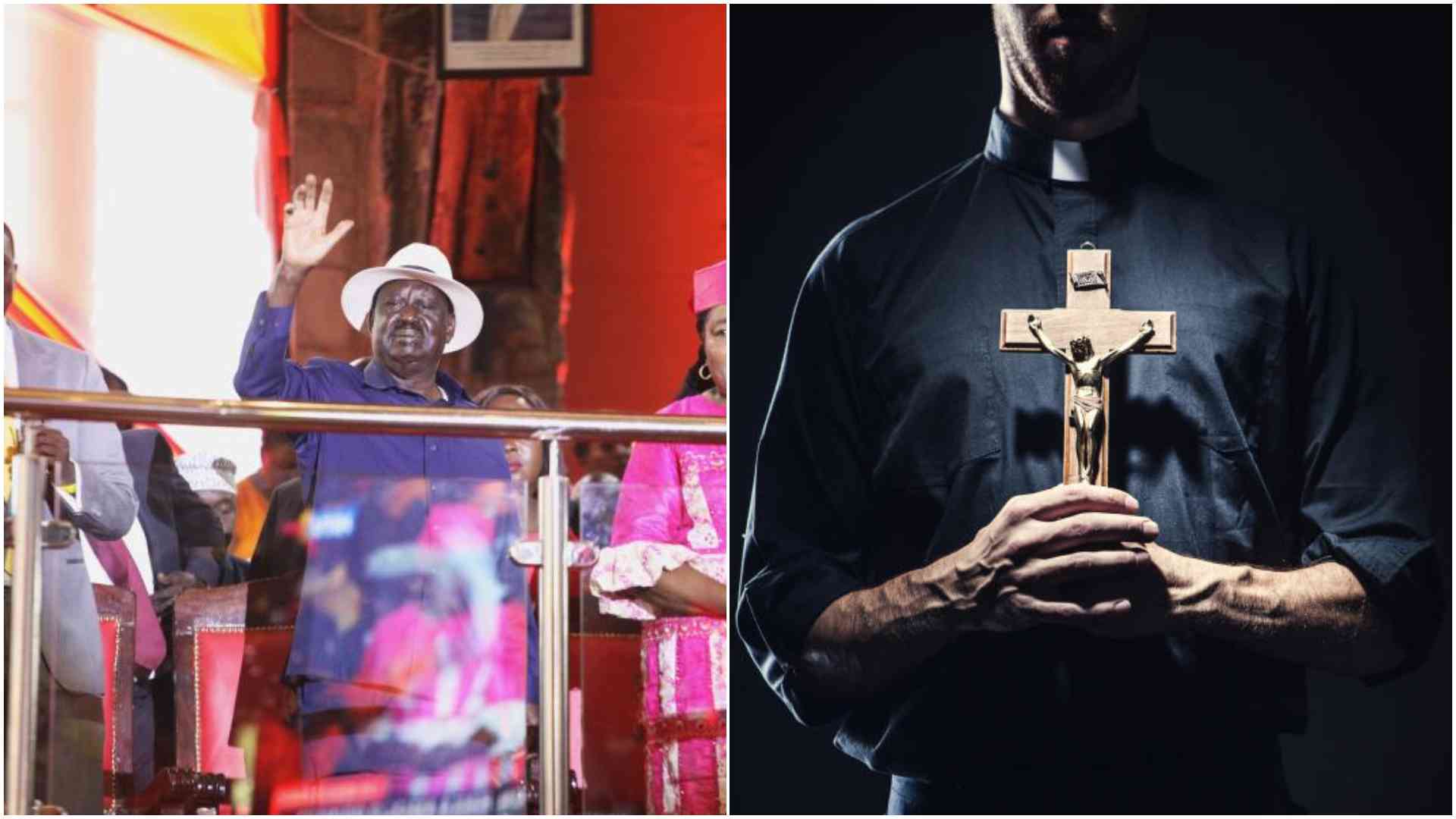
A white American nun and a Father Opiyo got Raila out of Nairobi.They dressed him as a priest, gave him glasses and shaved his head clean. Raila became a completely different person after the changes. Sitting at the back of the car Raila read newspapers as they passed the numerous roadblocks mounted on the road by the police.
When they finally reached the Catholic station in Kisumu, Raila was booked in under the name of Father Augustine from Machakos. He was later transferred to Rang'ala Mission Station and was booked under the same name.
His father, Jaramogi Odinga, then sent a car to pick him. At 4pm, Raila was moved to Olago Beach where he was to be smuggled out of the country through the lake. He boarded the diesel-powered boat and began his voyage to Uganda. The journey passed by Ndeda Island to pick up some passengers and left for Uganda at 8pm. After two hours, Hezron Orori, the navigator announced that they were in Uganda. A heavy storm hit the lake later and Orori's wife began to shiver. Raila lent her his jacket and, facing the unforgiving cold himself, he turned to a bottle of vodka given to him by a friend to get some warmth.
Raila spent the night at Sigulu. With the help of sympathetic Kenyans and Tanzanians living in Uganda, he acquired Ugandan papers in the name of Joseph Ojiwa Wadenya.
Once in Kampala, Raila was hosted by one of his friends. The friend reported his arrival to UNHCR, which advised Raila to remain underground since the Kenyan government had sent special officers to kidnap him and send him back home.
To be moved out of Uganda, Raila had to be disguised once more.
Subscribe to our newsletter and stay updated on the latest developments and special offers!