×

The Standard e-Paper
Informed Minds Prefer The Standard





Audio By Vocalize
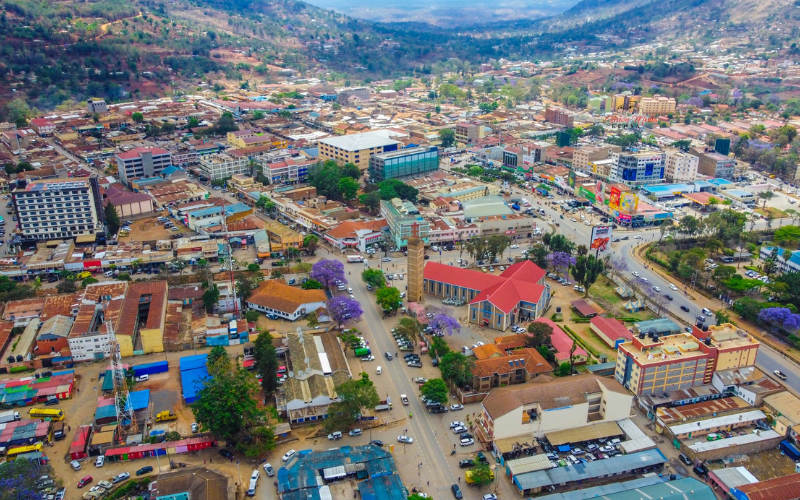
Some journeys begin with a destination. Others begin with a question.
Mine to Machakos started with one that had lingered in my mind for years. If Machakos is one of Kenya's oldest towns, why is it called Machakos? And how did a place that almost became the nation's capital lose that distinction to Nairobi?
Those questions were reason enough to leave my home county of Kajiado one morning and head east. This was not another trip to tick off my travel list. It was a journey to follow a story.
I have always been fascinated by place names. Behind every name lies a people, a language, a memory or a legend waiting to be rediscovered. Wherever I travel, I find myself asking the same question: Who gave this place its name, and why? Machakos, I would soon discover, answers that question in layers.
Less than an hour's drive from Ngong brought me to Machakos town, where I met my guide, James Mbuvi. Over a cup of tea, he offered a glimpse into the town's rich past.
"The story of Machakos is written into the hills that cradle the town, whispered beneath sacred trees protected for generations, carried in prophecies still retold by elders, and preserved in the memory of a community whose history almost changed the map of Kenya," he said.
The description instantly captured my imagination.
"Long before Nairobi rose to become the country's bustling capital, before glass towers reached into the sky and highways carried millions of people every day, Machakos was already making history," Mbuvi explained.
Founded in 1887, the town predates Nairobi by nearly a decade. It became the first administrative headquarters of the British East Africa Protectorate and, for a brief period, appeared destined to become the colony's political and commercial centre.
History, however, had other plans.
To understand why, Mbuvi suggested we explore the town on foot.
"You cannot understand Machakos from inside a car. You have to let the town tell you its own story," he said with a smile as we set off.
Every hill, road and landmark seemed to carry a memory. As we drove towards the Iveti Hills, Mbuvi pointed to a site that most visitors would likely pass without a second glance.
"That is where one of our most important stories begins," he said.
Long before European explorers and colonial administrators arrived, the Akamba regarded the hills as sacred. Among the stories passed down through generations is that of Syokimau, the legendary prophetess whose visions remain central to local oral tradition.
According to local accounts, Syokimau foretold the arrival of strangers carrying "fire in their pockets", a description later associated with Europeans and their firearms. She is also said to have predicted the coming of a giant "fire-eating snake" that would crawl across the land, long before the railway reached the region.
Whether viewed as history, folklore or faith, the prophecies remain an important part of Akamba identity.
One prophecy, however, would become closely linked to Machakos' own destiny.
Mbuvi explained that the British first established an administrative station at Nzoi before relocating it to Machakos, then known as Fort Machakos. The settlement quickly grew into an important colonial administrative centre, attracting traders, missionaries and explorers heading inland.
For a time, Machakos seemed destined for greatness.
Then came George Leith.
Remembered as Fort Machakos' first administrator, Leith remains a divisive figure in local history. According to Mbuvi, his strained relationship with the local community steadily eroded trust. Oral accounts describe him as a colonial officer who frequently seized food and livestock from residents without compensation.
But one act, more than any other, left a lasting scar.
Leith ordered the felling of an Ithembo tree that stood atop the Iveti Hills.
To colonial officials, it may have appeared to be little more than clearing land. To the Akamba, it was a profound act of disrespect.
"The Ithembo tree is not just a tree," Mbuvi said quietly. "It represents a sacred place where our ancestors connected with God."
Listening to him, I was reminded that travel often changes perspective. What may seem ordinary to a visitor can hold centuries of meaning for the people who call a place home.
Many local accounts suggest that the deteriorating relationship between the colonial administration and the Akamba community, combined with a devastating famine that claimed thousands of lives and reduced the available labour force, influenced the decision to reroute the Uganda Railway away from Machakos.
Instead, the railway passed through the swampy settlement known as Enkare Nyrobi, the Maasai phrase for "the place of cool waters".
That settlement would later become Nairobi.
Standing beside the weathered pillars that mark the old entrance to Fort Machakos, quietly overlooking the town, it is difficult not to wonder how different Kenya's history might have been had the railway taken another route.
Subscribe to our newsletter and stay updated on the latest developments and special offers!