×

The Standard e-Paper
Informed Minds Prefer The Standard





Audio By Vocalize
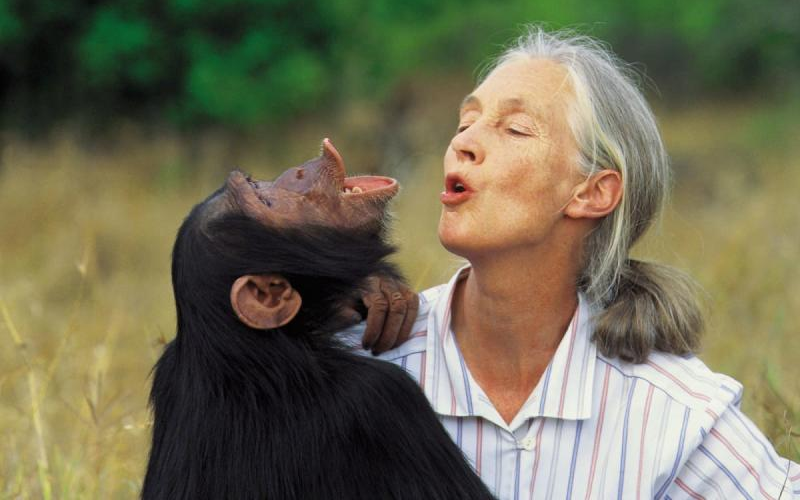
I met Jane Morris Goodall, the world-renowned conservationist, at a hotel in Nairobi in July 2018. She died on Wednesday, aged 91.
When Kenyan scientist Dino Martins (pictured right with Goodall) called her to the stage, she ran up with the energy of someone half her age, to the amusement of those in attendance.
Her visit to Nairobi in 2018 was deeply personal. It was connected to her former husband, Hugo Van Lawick, whom she had divorced in 1974. In 1962, Van Lawick began photographing and filming chimpanzees in Gombe, Tanzania, on the recommendation of the late Kenyan palaeontologist Dr Louis Leakey.
Goodall was in Nairobi to showcase Jane, a biographical documentary created from long-lost footage of her early years in Gombe. She was also promoting her Roots and Shoots initiative, which encourages young people to support conservation.
Before a captivated audience, she shared what she called her "love affair" with African wildlife - especially chimpanzees - and recounted being the first person to observe them using "tools" to dig out termites.
Born in April 1934 in Hampstead, London, Goodall grew up in modest circumstances. "There was no money for university education," she recalled during our interview. "Also, I never wanted to get married but desired to live with animals in Africa."
Her fascination with wildlife began early. Her father gave her a toy chimpanzee instead of a teddy bear to mark the birth of a baby chimp at a London zoo. At home, she spent hours observing the family dog, Rusty, and their chickens.

By the age of ten, Goodall's dream was to go to Africa - an ambition that drew ridicule from friends and relatives who dismissed it as impossible for a young English girl. But fate intervened when a family friend invited her to visit their farm in Kenya in 1956.
Determined not to lose the chance, Goodall left her job in London, returned home to Bournemouth, and worked as a waitress to save for the boat journey. In April 1957, she set sail for Africa - a journey that would redefine her life.
In Kenya, she met Dr Louis Leakey, one of the world's leading palaeontologists, whose family was renowned for excavating fossils across East Africa. Leakey was seeking someone to study great apes - humanity's closest relatives - to shed light on early human behaviour.
At her friend's urging, Goodall telephoned Leakey, who hired her as his secretary to assess her dedication. "Leakey was impressed with my knowledge of wild Africa. He then suggested I work for him in studying chimpanzees in Gombe, Tanzania," she recalled.
When she admitted she had no university degree, Leakey replied, "I am looking for someone with an open mind."
Goodall later earned a PhD in Ethology at Newnham College, Cambridge, from 1962 to 1966, becoming only the eighth person ever admitted without an undergraduate degree.
Her journey mirrored Leakey's own. An injury during a rugby match had led him to Tanzania for an archaeological expedition, where he shifted from medicine to anthropology and eventually made East Africa his base of discovery.

Goodall also faced scepticism from British officials who doubted that a young woman could survive in the wilds of Africa. They relented only when her mother agreed to accompany her for the first three months.
The chimpanzees, too, were wary at first. "They would see me and run away," she recalled. Patiently, she earned their trust - beginning what became the world's longest continuous study of chimpanzees and a series of discoveries that reshaped science.
"I observed chimps using a stick to get termites out of a hole. They would strip off the leaves, dip it into the hole and wait for a few minutes then bring it out to the mouth. This was the first time an animal had been observed making and using a tool. But some did not believe it," she said.
She also noted their remarkable intelligence, saying chimpanzees could "decipher 600 signs used by the deaf people in America."
Over her lifetime, Goodall wrote more than twenty books and appeared in numerous documentaries, including Animal Planet's series and the 2002 feature film Jane Goodall's Wild Chimpanzees.
Eulogising her, Dino Martins said: "Jane provided lifelong inspiration to young people and conservationists across Africa and the world. It was an immense privilege to spend time with her in the field. She was an amazing person and champion of nature and our connections with the living world."
Subscribe to our newsletter and stay updated on the latest developments and special offers!