×

The Standard e-Paper
Read Offline Anywhere





Audio By Vocalize
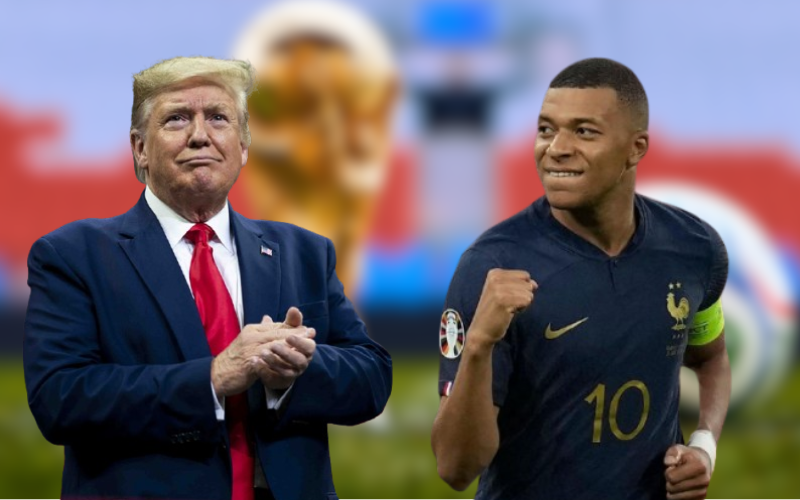
Politics, diplomacy and football have collided spectacularly at the 2026 FIFA World Cup, with presidents, lawmakers and heads of state dominating headlines that were expected to be reserved for goals, tactics and giant-killing upsets.
From a United States president lobbying FIFA over a controversial red card to a diplomatic row between France and Paraguay sparked by racist remarks directed at France captain Kylian Mbappé, the tournament has increasingly become a battleground beyond the football pitch.
The latest political storm erupted after Mbappé became embroiled in an extraordinary online confrontation with Paraguayan senator Celeste Amarilla, prompting responses from governments, football authorities and even French President Emmanuel Macron.
Long before Mbappé found himself at the centre of a diplomatic dispute, however, another controversy had already cast doubt over FIFA's independence.
The political drama began when U.S. President Donald Trump publicly admitted contacting FIFA president Gianni Infantino over the suspension of United States striker Folarin Balogun.
Balogun, one of the tournament hosts' standout performers, had been sent off during the World Cup and faced suspension ahead of the knockout stages.
Speaking to reporters, Trump questioned both the decision and the referee.
"I saw the play, and I'm a person that loves sports... that wasn't a foul. That wasn't even an infraction."
He went further, suggesting the match official's previous record should be scrutinised before revealing that he had personally asked FIFA to review the incident.
"He's our best player, or one of our best players. He gave him a red card... Yes, I asked for a review by FIFA."
Days later, Balogun's suspension was overturned, prompting accusations that political pressure may have influenced football's judicial process.
Although FIFA insisted its disciplinary system acted independently, the sequence of events fuelled intense debate across the sporting world.
Infantino responded with an unusually detailed statement defending FIFA's judicial structures.
"FIFA's judicial bodies are independent. They operate autonomously, apply the FIFA Disciplinary Code and decide cases based on the applicable regulations and the specific facts before them."
He acknowledged receiving Trump's call but insisted it had no bearing on the outcome.
"Yes, I regularly discuss matters related to the FIFA World Cup with the President of the United States.
"On this matter, I did receive a call from President Donald Trump, just as I receive calls from heads of state, government officials, football stakeholders and business executives from around the world.
"During our conversation, I explained that there was an ongoing legal process involving FIFA's independent judicial bodies and that the case would be decided in due course by the competent bodies."
Infantino added that while he sometimes disagrees with disciplinary rulings, respecting their independence is essential.
"Whether we personally like a decision or not is irrelevant. Respect for independent institutions and the rule of law is what protects the integrity of our competitions and the credibility of FIFA."
The explanation did little to silence critics.
Former FIFA president Sepp Blatter became one of the highest-profile figures to publicly question the situation.
"Red cards are not overturned by political phone calls.
"They are overturned by rules, evidence and independent bodies.
"If a U.S. President intervenes with the FIFA President, and a player is suddenly cleared before a World Cup knockout match, the question is unavoidable: Quo vadis, FIFA?
"Football must never become a playground for political power."
Ironically, the controversy proved meaningless on the pitch.
Despite Balogun's availability, the United States were thrashed 4-1 by Belgium national football team, crashing out of the tournament and ending hopes that the reinstated striker would inspire a memorable World Cup run.
As the fallout from the Balogun affair continued, another political firestorm erupted after France edged Paraguay in the Round of 16.
Senator Celeste Amarilla launched a personal attack on Mbappé on social media, using racist and deeply offensive language while questioning his heritage and character.
She accused the France captain of arrogance throughout the match and claimed Paraguay's players should have physically confronted him after the final whistle.
The comments sparked immediate international outrage.
Mbappé responded forcefully, accusing the senator of racism and saying she had disgraced both herself and her country.
"You are a despicable woman and unworthy of your position.
"You do not represent Paraguay, that country which has sweated passion and honour throughout the competition.
"Through your recklessness and your brazen racism, the entire world has already forgotten the journey and the historic effort that your players accomplished during this World Cup.
"I will never allow people like her the freedom to spread their hatred and racism across the world."
The controversy quickly moved beyond football.
The French Football Federation condemned Amarilla's remarks as "utterly abhorrent and unacceptable".
Calling the comments "criminal and reprehensible", the federation announced it would report the matter to prosecutors while reaffirming its commitment to fighting racism.
"The Federation extends its full support to its captain, its players and more generally to all victims of such odious remarks."
Macron also weighed in.
"Another goal by Kylian Mbappé, this time against racism.
"All my support. When words become dirty, our values stand firm: dignity, respect and fraternity."
Facing growing international criticism, the Paraguayan government swiftly distanced itself from Amarilla's remarks.
In an official statement, it stressed that her comments reflected her personal views and not those of the state or the Paraguayan people.
"The Government of the Republic of Paraguay deplores and rejects the statements made by Senator Celeste Amarilla."
The government reaffirmed its commitment to equality, human rights and the fight against racism, xenophobia and all forms of discrimination, while expressing solidarity with those offended by the remarks.
Several Paraguayan politicians have also publicly rejected Amarilla's comments in an effort to prevent the controversy from damaging relations with France.
With criticism mounting, Amarilla later published an open letter to Mbappé.
While acknowledging she had deleted her original social media posts after regretting parts of their content, she defended her anger, accusing the French captain of arrogance before and during the match.
She claimed Mbappé had disrespected Paraguayan players, insulted opponents on the pitch and refused to shake goalkeeper Orlando Gill's hand after the final whistle.
Amarilla insisted her criticism stemmed from what she viewed as unsportsmanlike conduct rather than hostility towards France.
She also demanded an apology from Mbappé for calling her "despicable" and "unworthy", accusing him of gender-based political violence and threatening legal action if he failed to retract the remarks.
The twin controversies have reinforced concerns that the 2026 World Cup is increasingly being defined by politics rather than football.
What began with visa disputes involving participating nations has evolved into presidential interventions, questions over FIFA's judicial independence, racism allegations, diplomatic exchanges and government statements.
For FIFA, whose statutes emphasise political neutrality and institutional independence, the tournament has become an unexpected test of its ability to keep football separate from political pressure surrounding the world's biggest sporting spectacle.
Subscribe to our newsletter and stay updated on the latest developments and special offers!